Strategy | UI/UX | Web App | Mobile App
Workplace Safety & Security Camera App
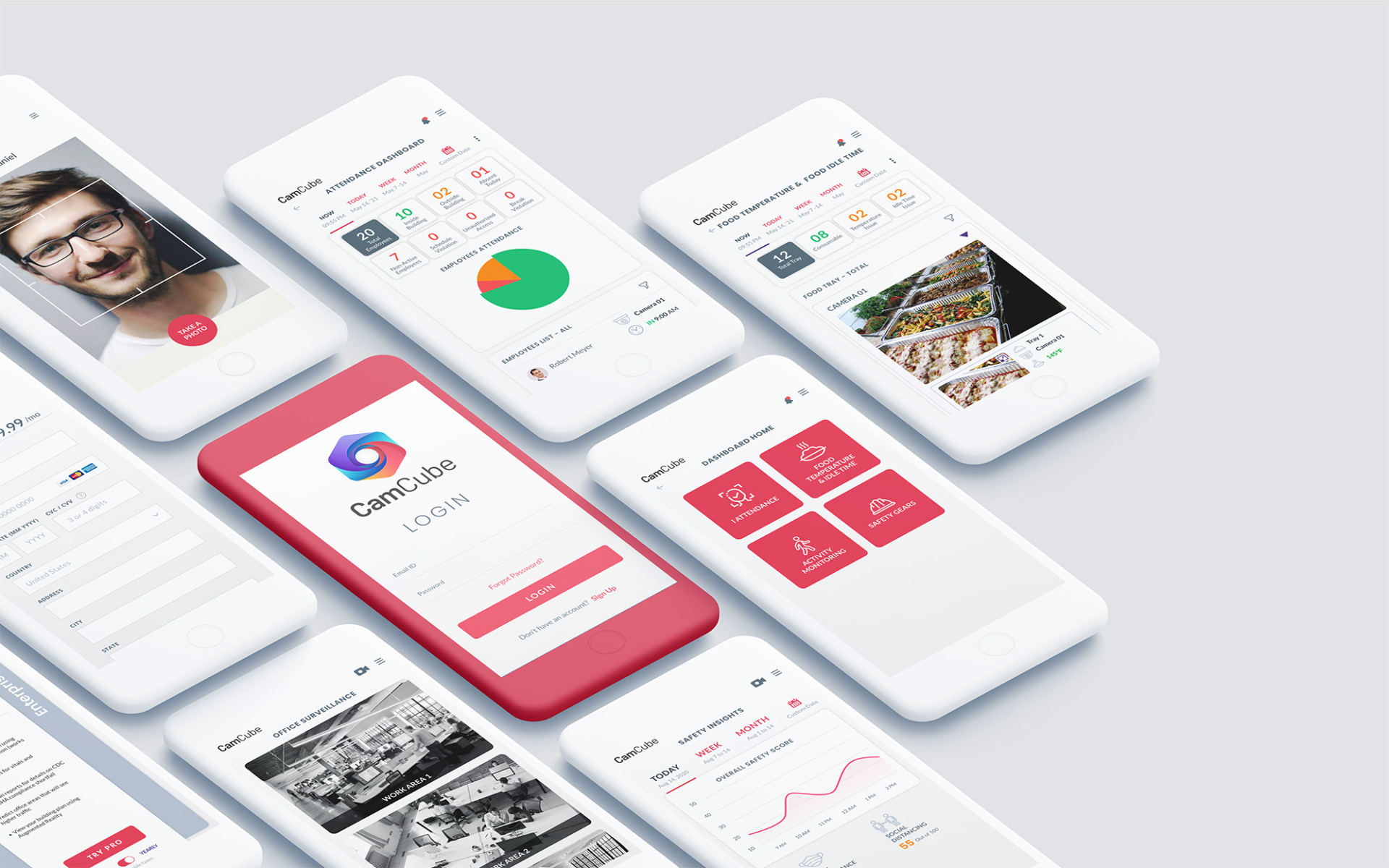
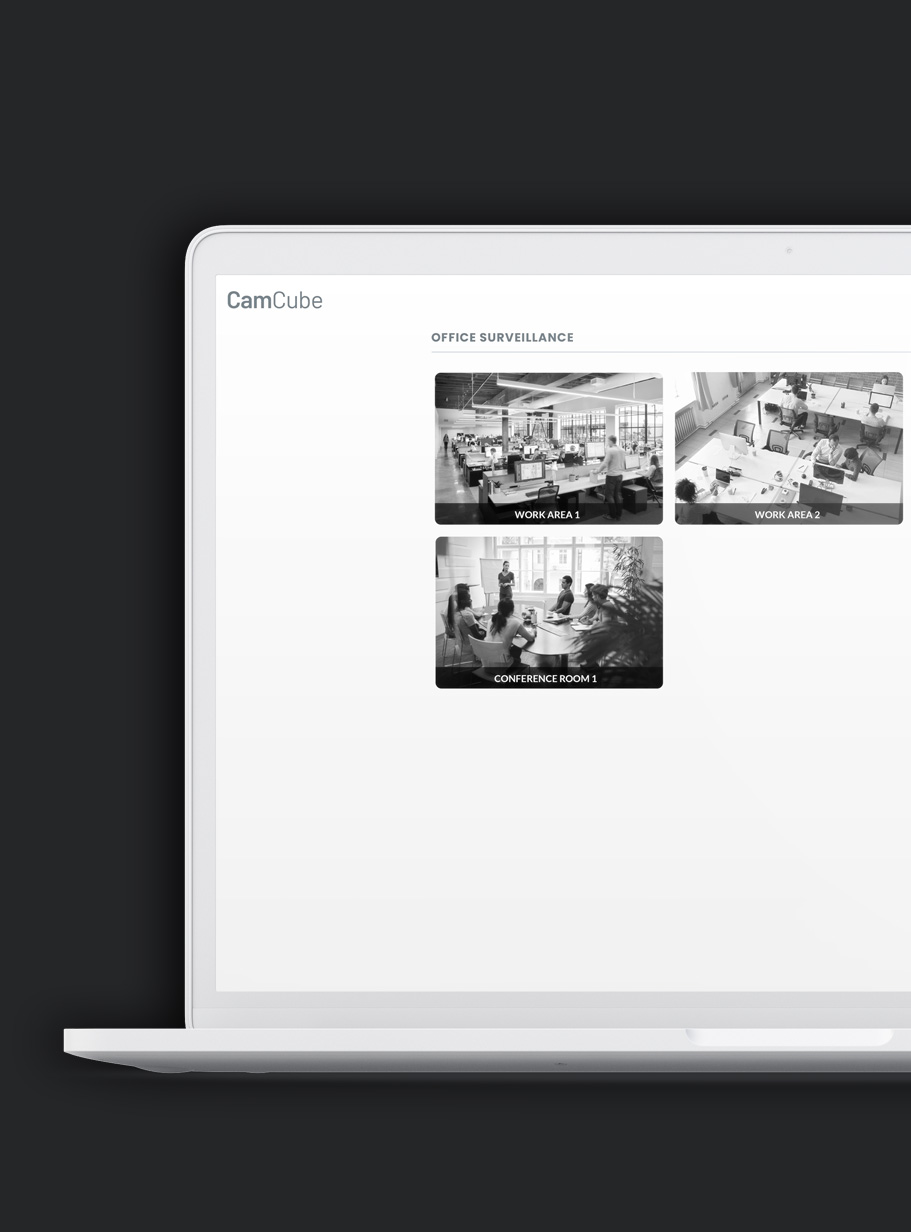
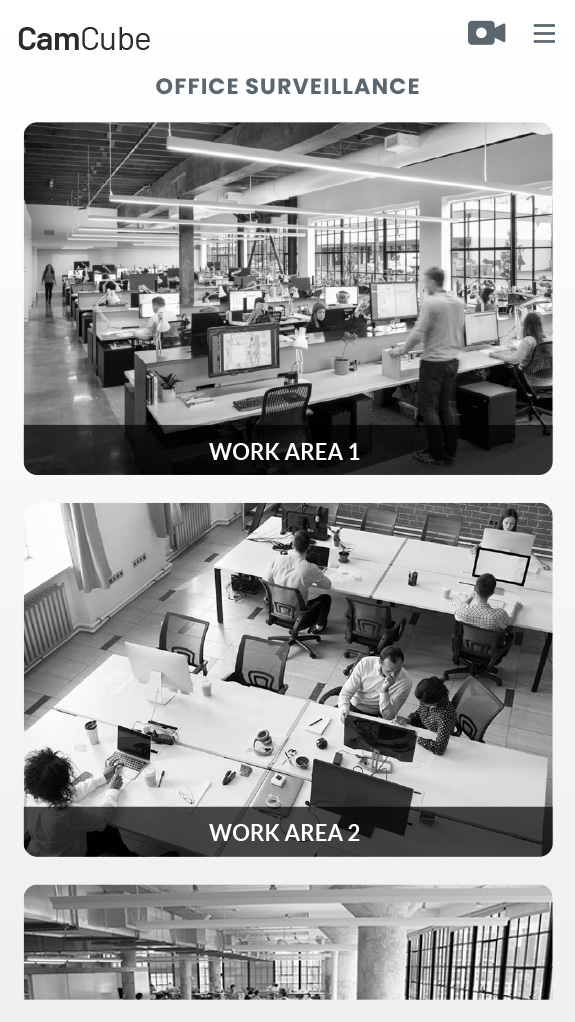
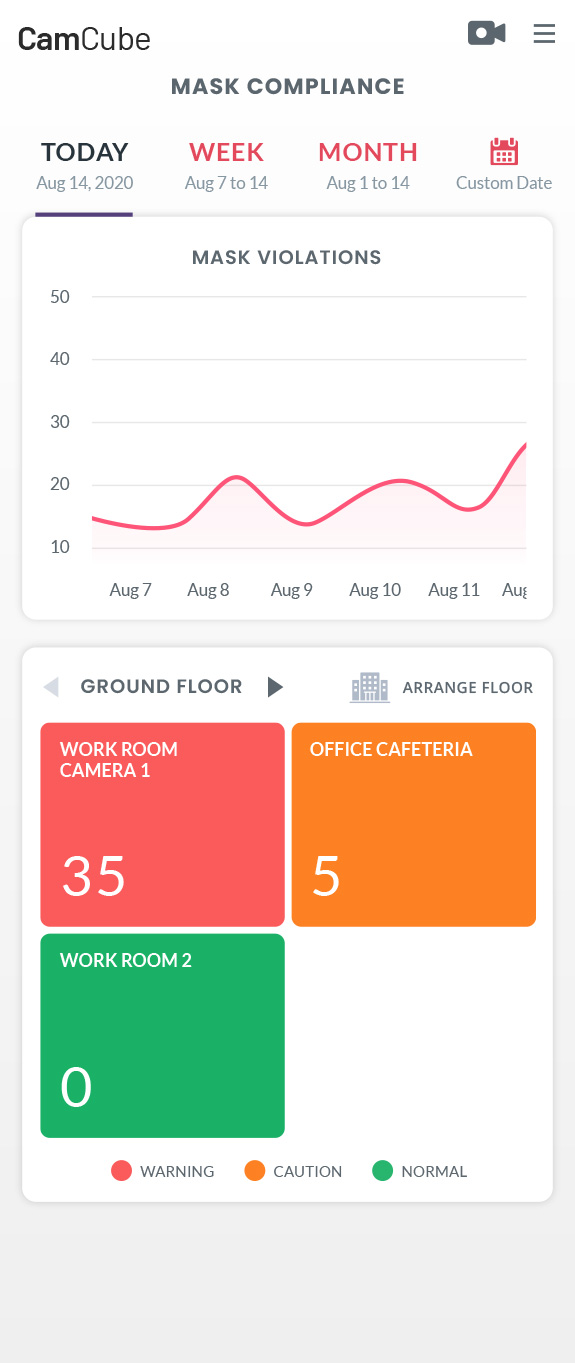
The CamCube Safety and Security Camera App is an intelligent, centralized command center designed to transform standard surveillance into a proactive operational asset. By layering advanced Artificial Intelligence over your existing CCTV infrastructure, CamCube automates critical health and safety protocols, monitors real-time compliance, and optimizes facility access—all through a single, intuitive interface.
Project Overview
Design
Strategy
Client
Problem Statement
The Core Conflict: Current workplace safety monitoring relies on fragmented, “dumb” video feeds and manual oversight. Security personnel are often overwhelmed by “monitor fatigue,” where staring at dozens of static screens leads to a 90% drop in incident detection after just 20 minutes.
When AI is introduced, it often creates a new problem: “Alert Blindness.” Systems provide too much raw data without clear hierarchy, making it difficult for users to distinguish between a minor compliance glitch and a critical safety emergency.
Key Pain Points:
- Cognitive Overload: Managing disparate systems for entry, CCTV, and health compliance forces users to jump between multiple tabs and interfaces, slowing down response times.
- Lack of Actionable Insights: Existing dashboards show what is happening but fail to provide a clear next step for the operator.
- Accessibility & Mobility Gaps: Critical safety alerts are often tethered to a desktop workstation, leaving floor managers in the dark while they are away from their desks.
- High Barrier to Entry: Complex enterprise software often requires extensive training, leading to low adoption rates and improper use of safety features.
The Intelligent Command Center
The solution centers on Proactive Visibility. I’ve replaced the traditional “wall of video” with a Heads-Up Display (HUD) approach. The UI doesn’t just show video; it interprets it, highlighting only what requires human intervention.
Key Solution Pillars:
1. The Unified Single-Pane-of-Glass Dashboard
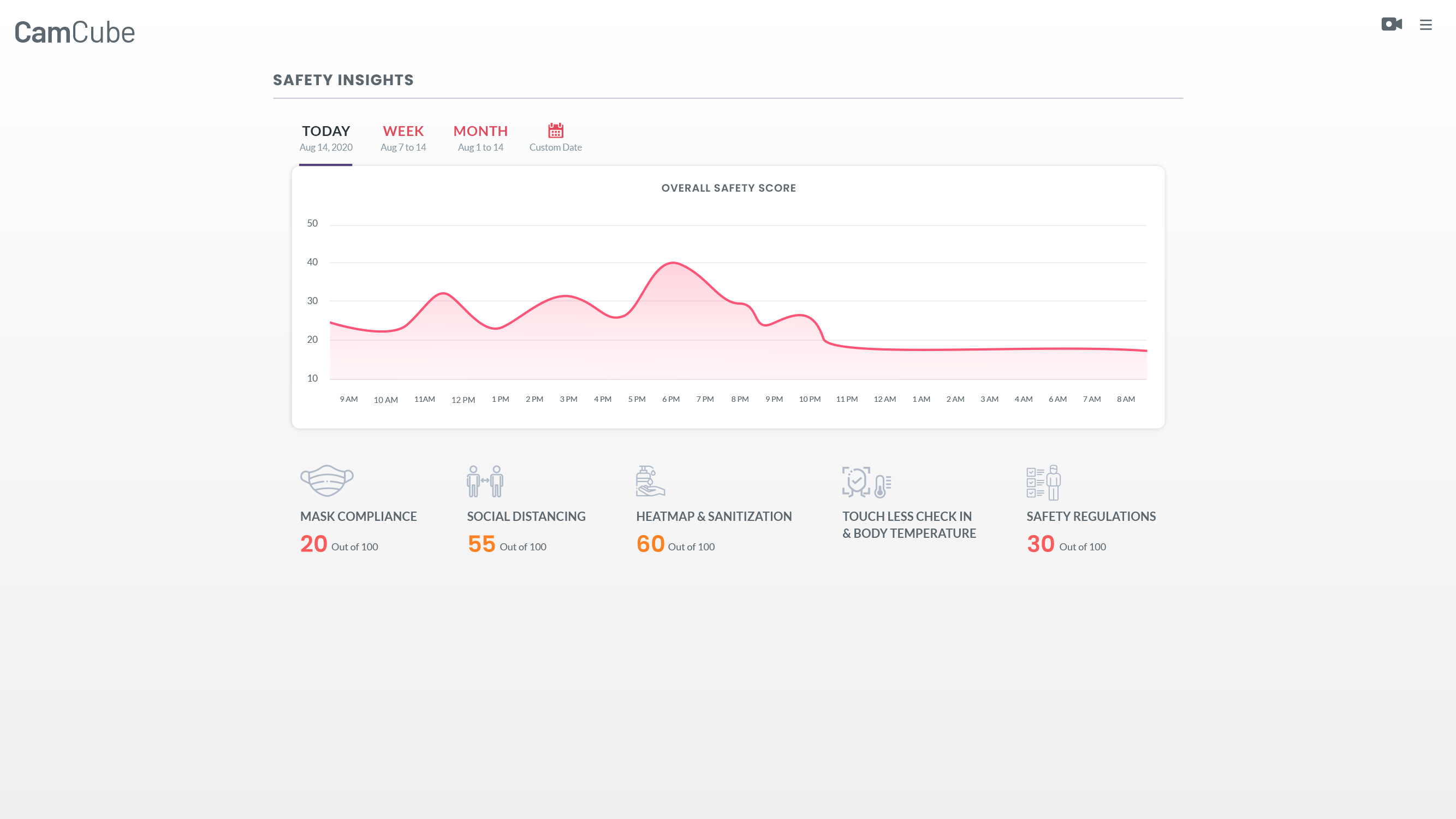
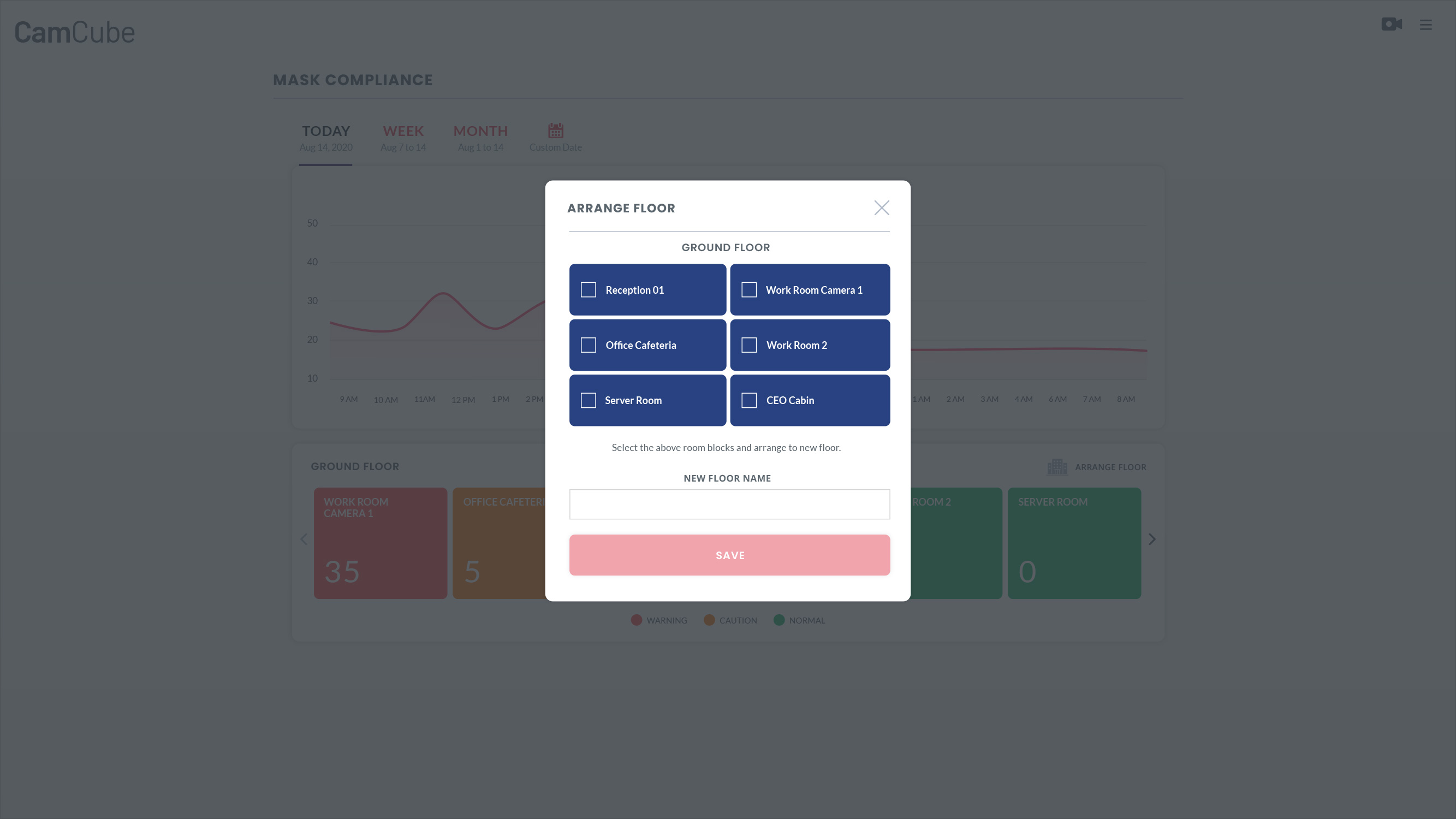
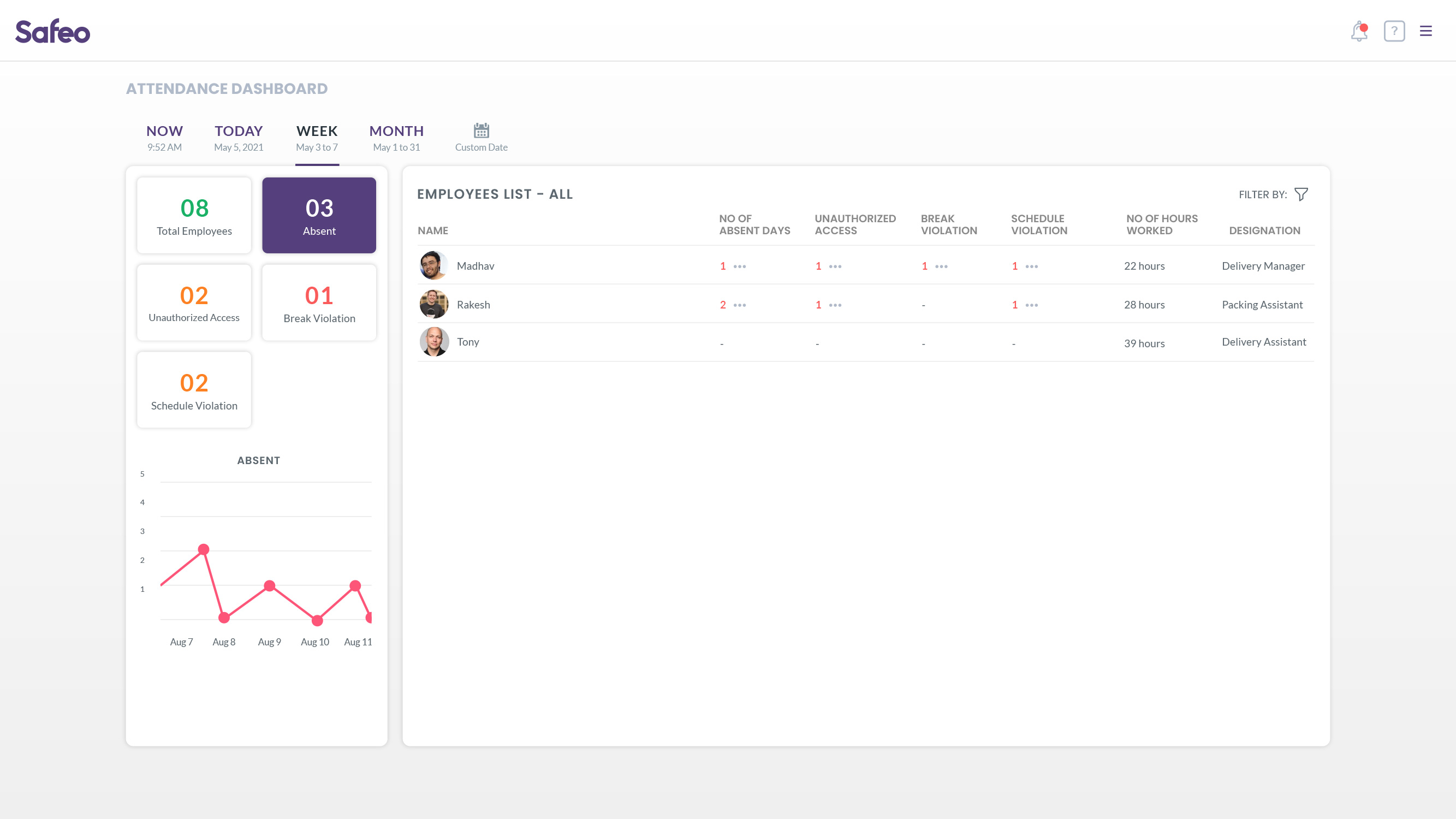
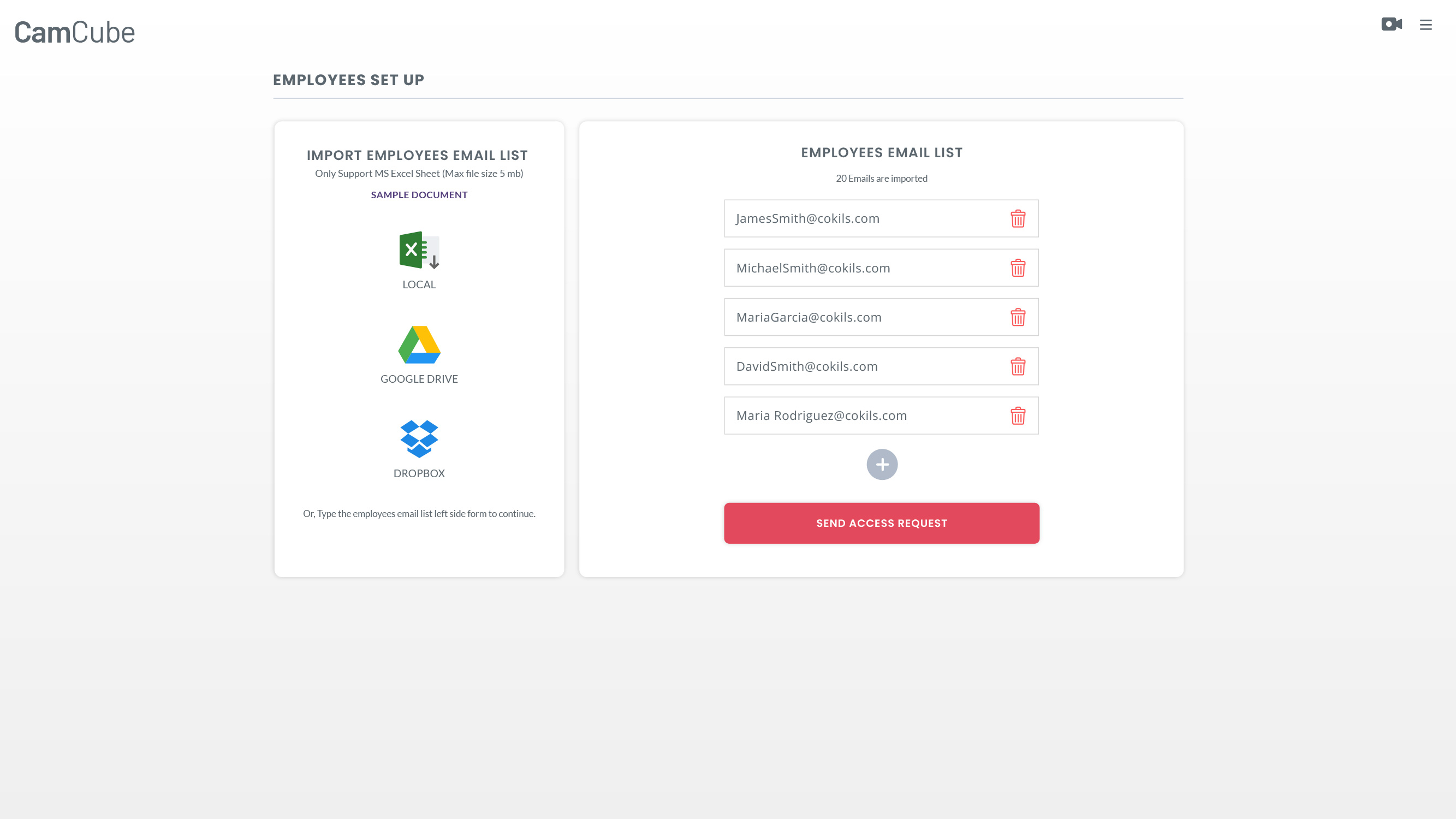
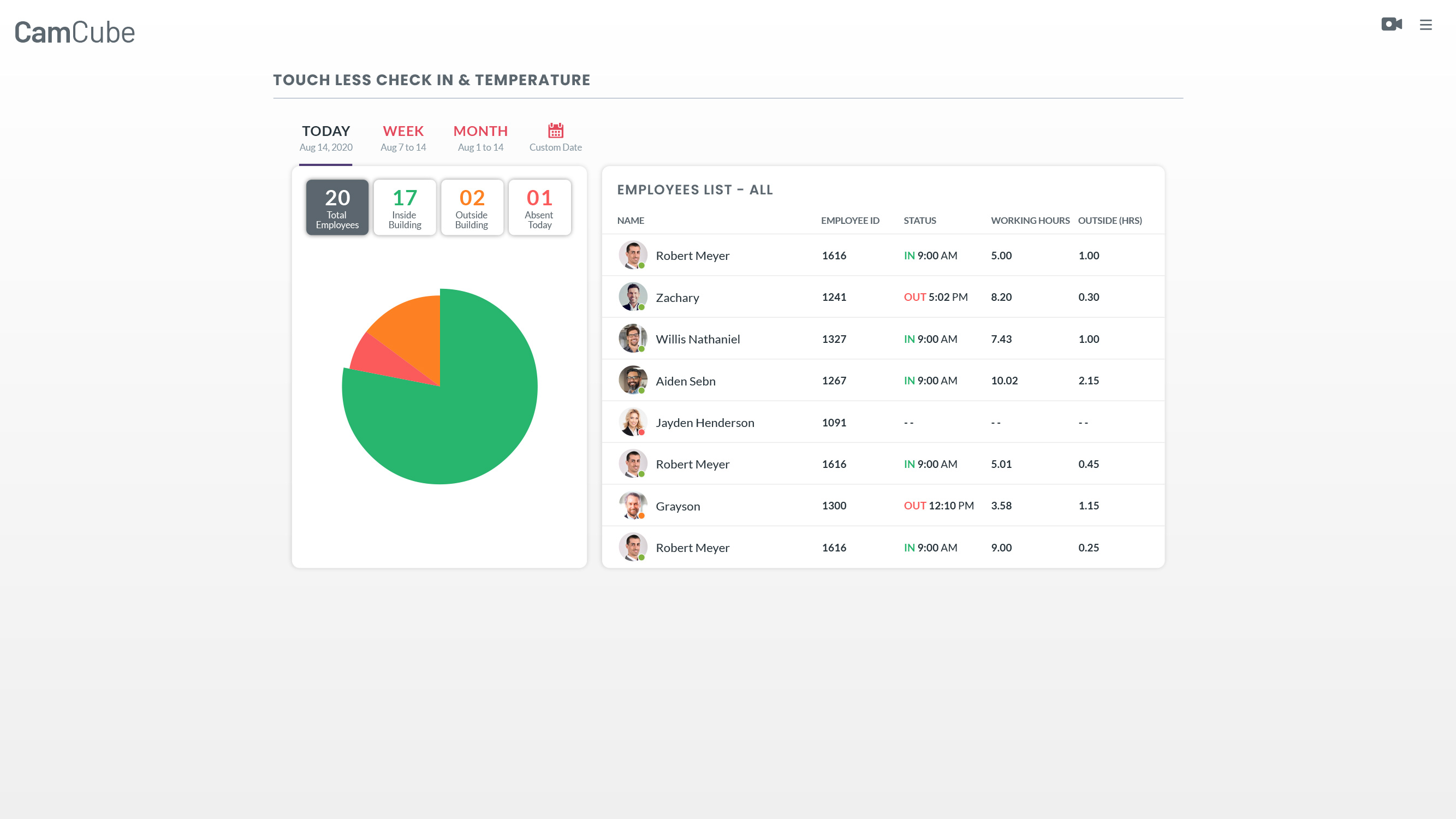
We eliminate “tab-switching” by consolidating CCTV feeds, AI health analytics, and entry logs into a single, cohesive interface.
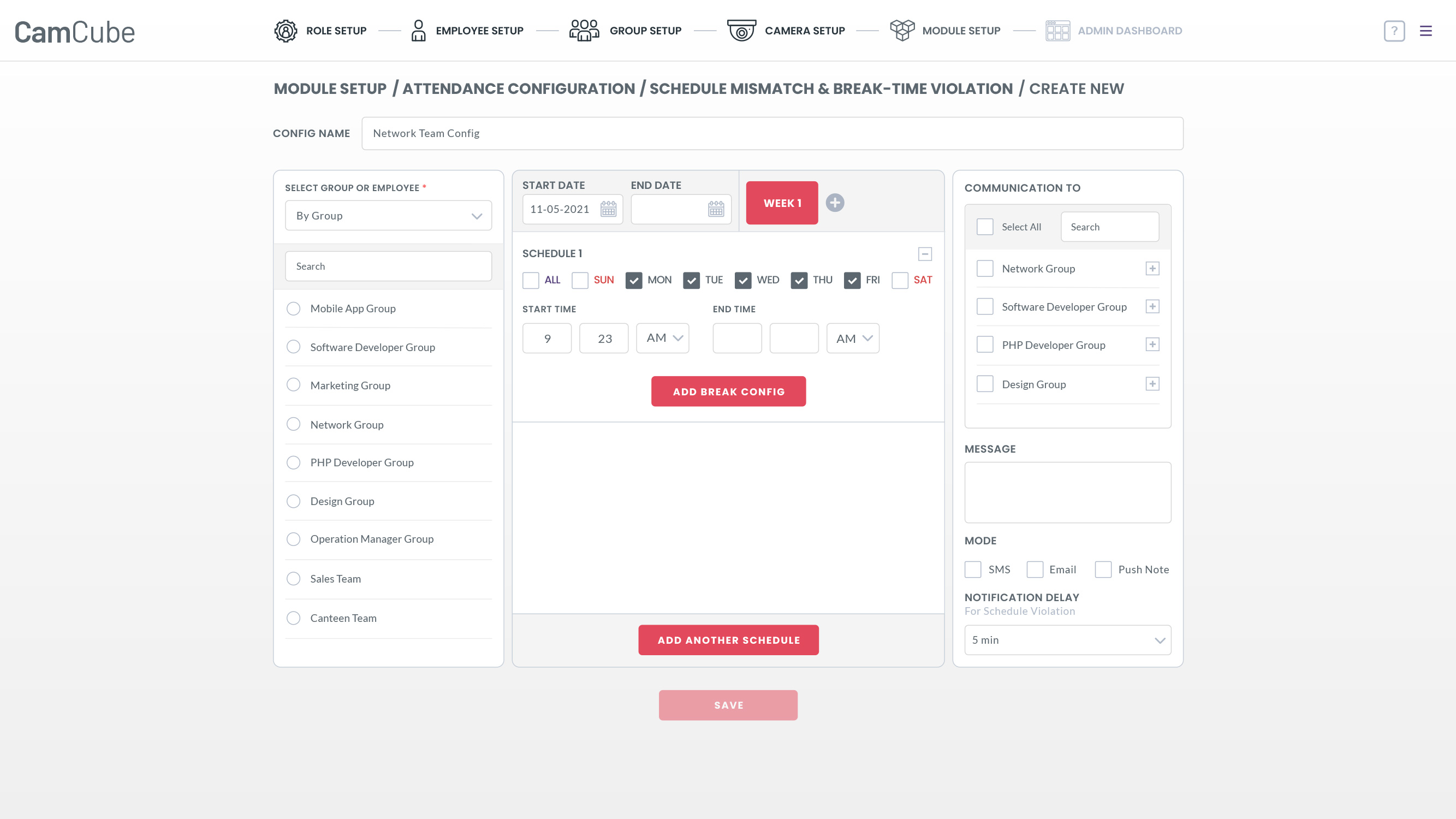
- Contextual Widgets: Real-time stats (e.g., current occupancy, PPE compliance rate) provide an instant pulse of the facility.
- Integrated Entry Logs: Access events are tied directly to video snapshots, allowing for instant verification.
2. Tiered Alert Intelligence (The “Red-to-Green” System)
To combat alert fatigue, we implemented a prioritized notification framework:
- Critical (Red): Immediate safety breaches (e.g., unauthorized zone entry). These trigger a persistent overlay and haptic feedback on mobile.
- Warning (Yellow): Compliance lapses (e.g., missing mask). These are queued in a sidebar for review without interrupting the main workflow.
- Informational (Blue/Green): Routine data (e.g., successful check-ins). These are logged silently for end-of-day reporting.
3. “Click-to-Action” Workflow
Every AI-detected incident is paired with a Suggested Action.
- Example: If a fall is detected, the UI instantly highlights the camera feed, provides the exact GPS/Room coordinates, and displays a “Contact Emergency Services” shortcut.
4. Mobile-First Safety Extensions
Safety happens on the floor, not behind a desk.
- Edge Notifications: Push alerts to security wearables and smartphones ensure that the right person is notified based on their physical proximity to the incident.
The Users and the Industry
The Industry Evolution: From Passive to Predictive
The security industry is undergoing a paradigm shift. We’ve moved past the era of “Record and Review.”
- The Compliance Burden: With tightening OSHA and global health regulations, enterprises face massive liabilities. Safety is no longer just a “cost center”—it’s a data-driven requirement.
The AI Integration Gap: Most industries have the hardware (CCTV) but lack the intelligence. There is a massive demand for software that acts as a “Force Multiplier” for existing staff.
- The Post-Pandemic Standard: Hybrid work and health monitoring have become permanent fixtures in facility management, requiring more sophisticated entry and tracking systems.
Personas
& User Journey Maps
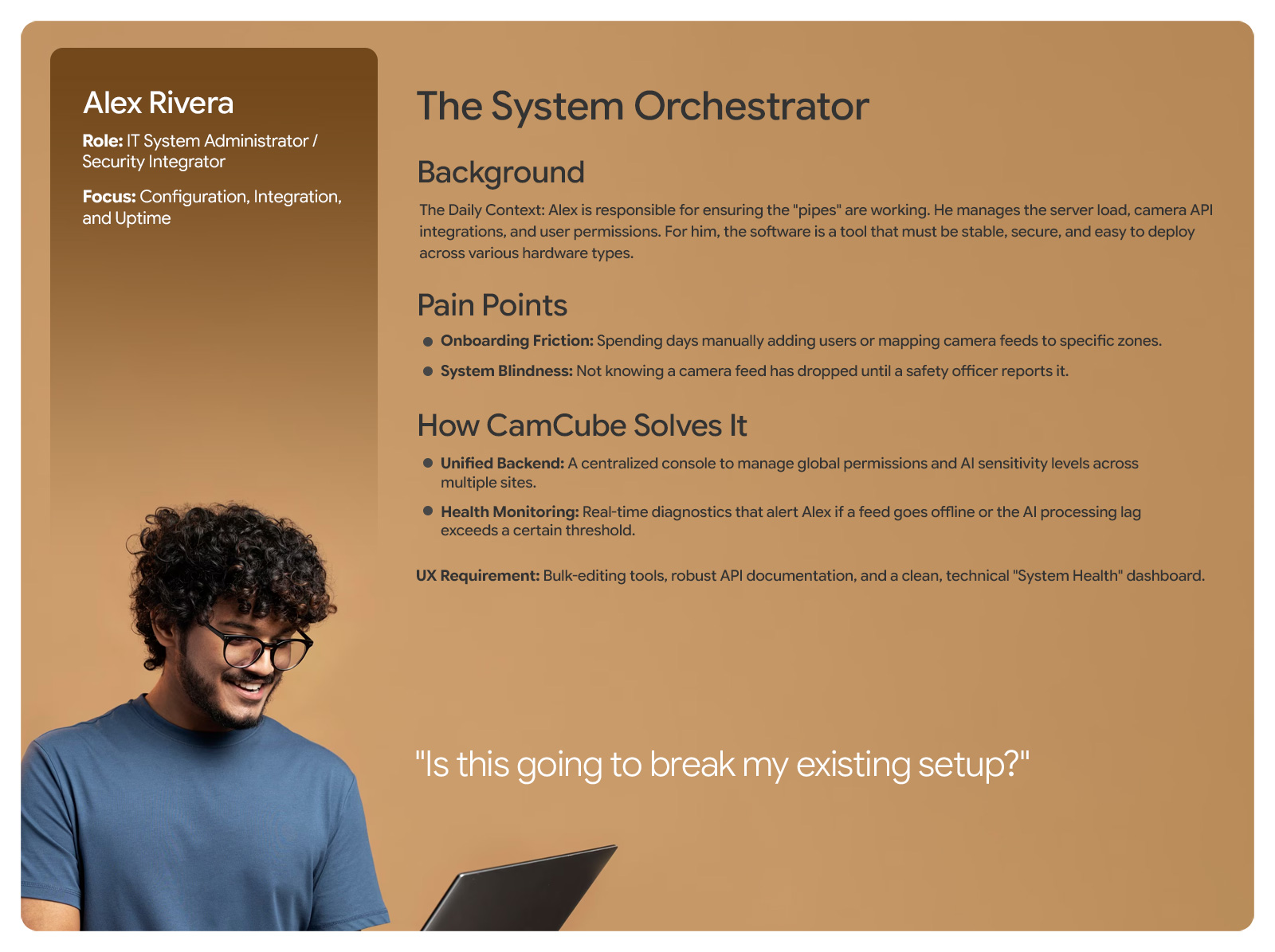
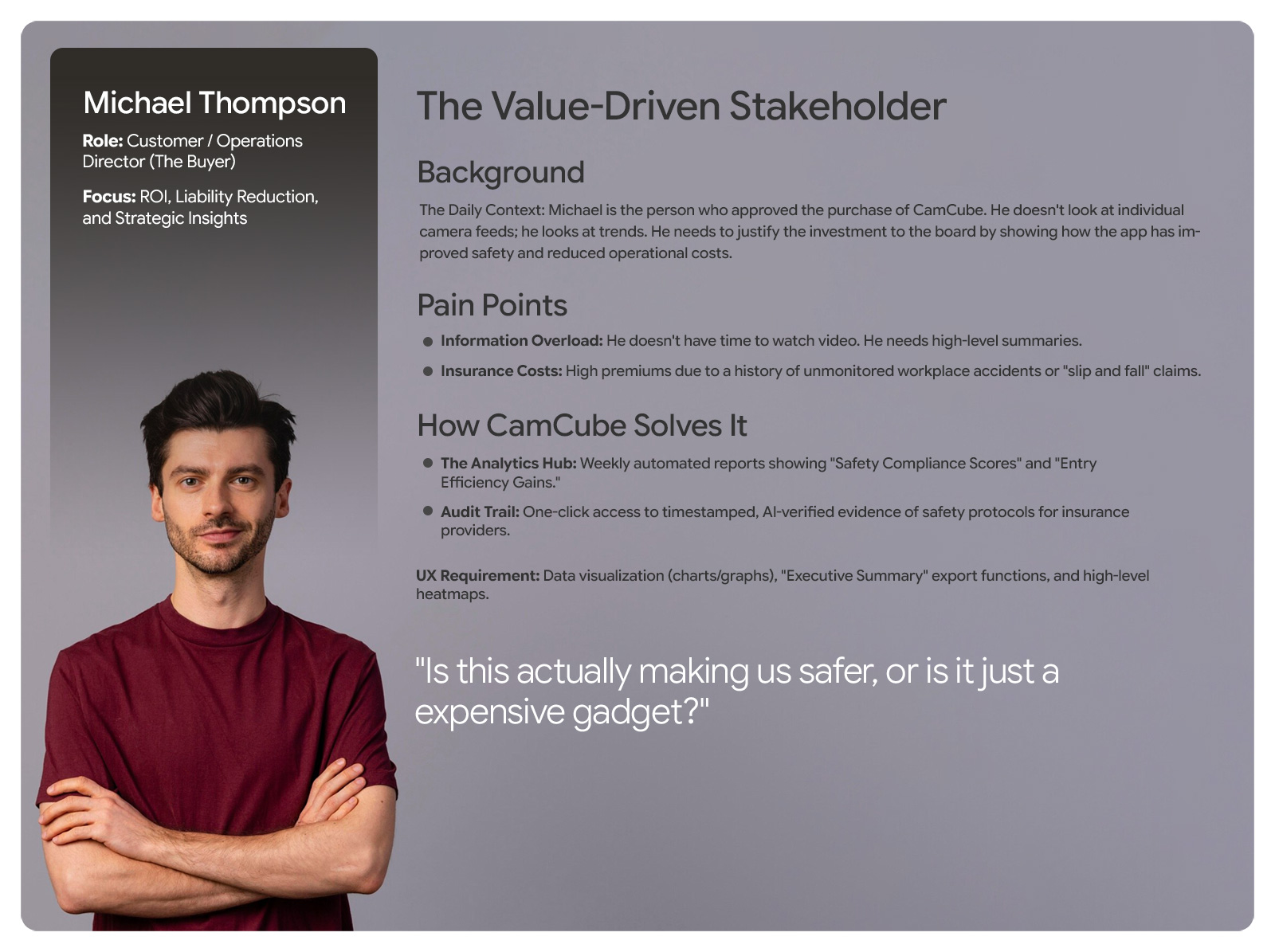
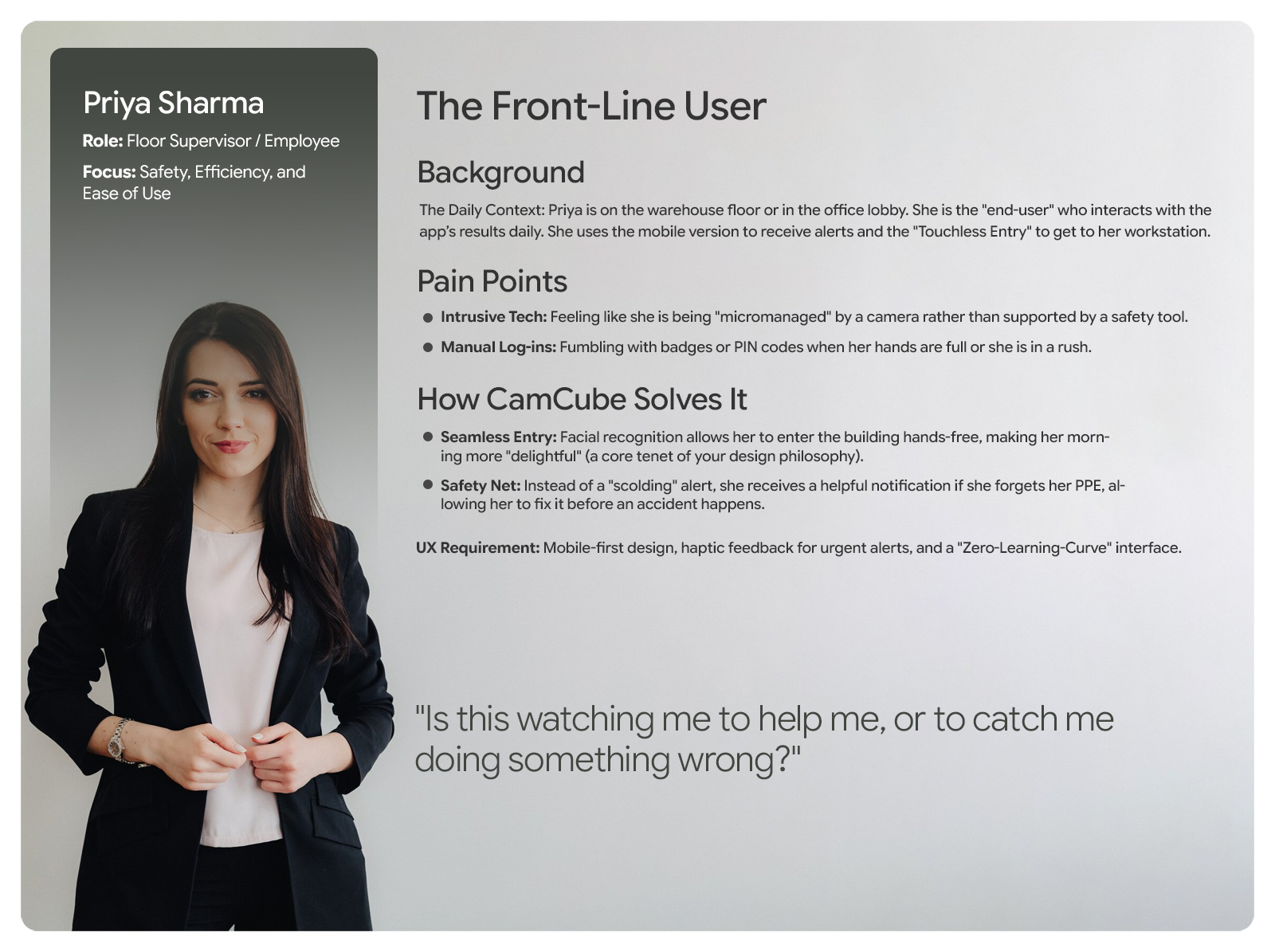
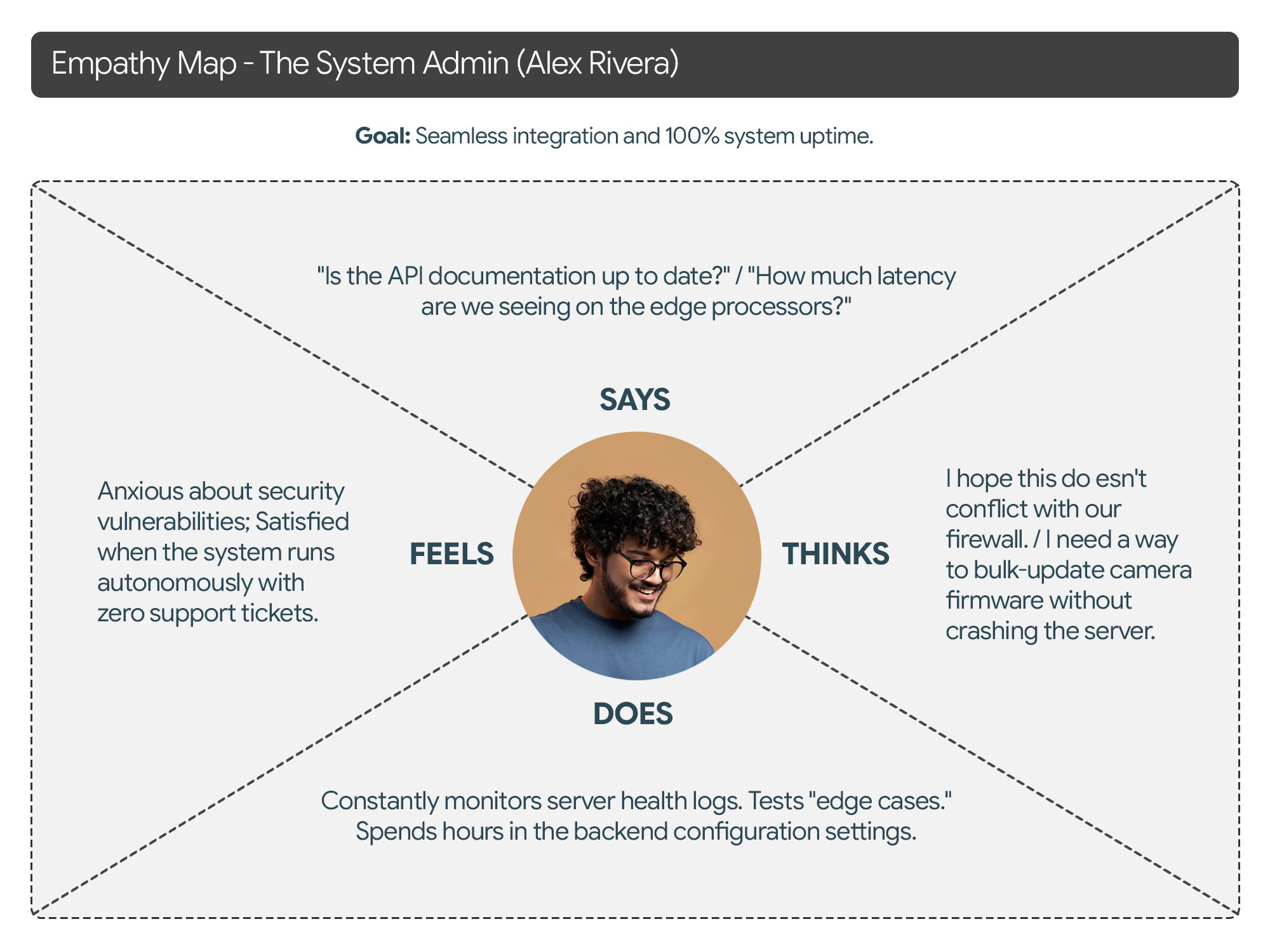
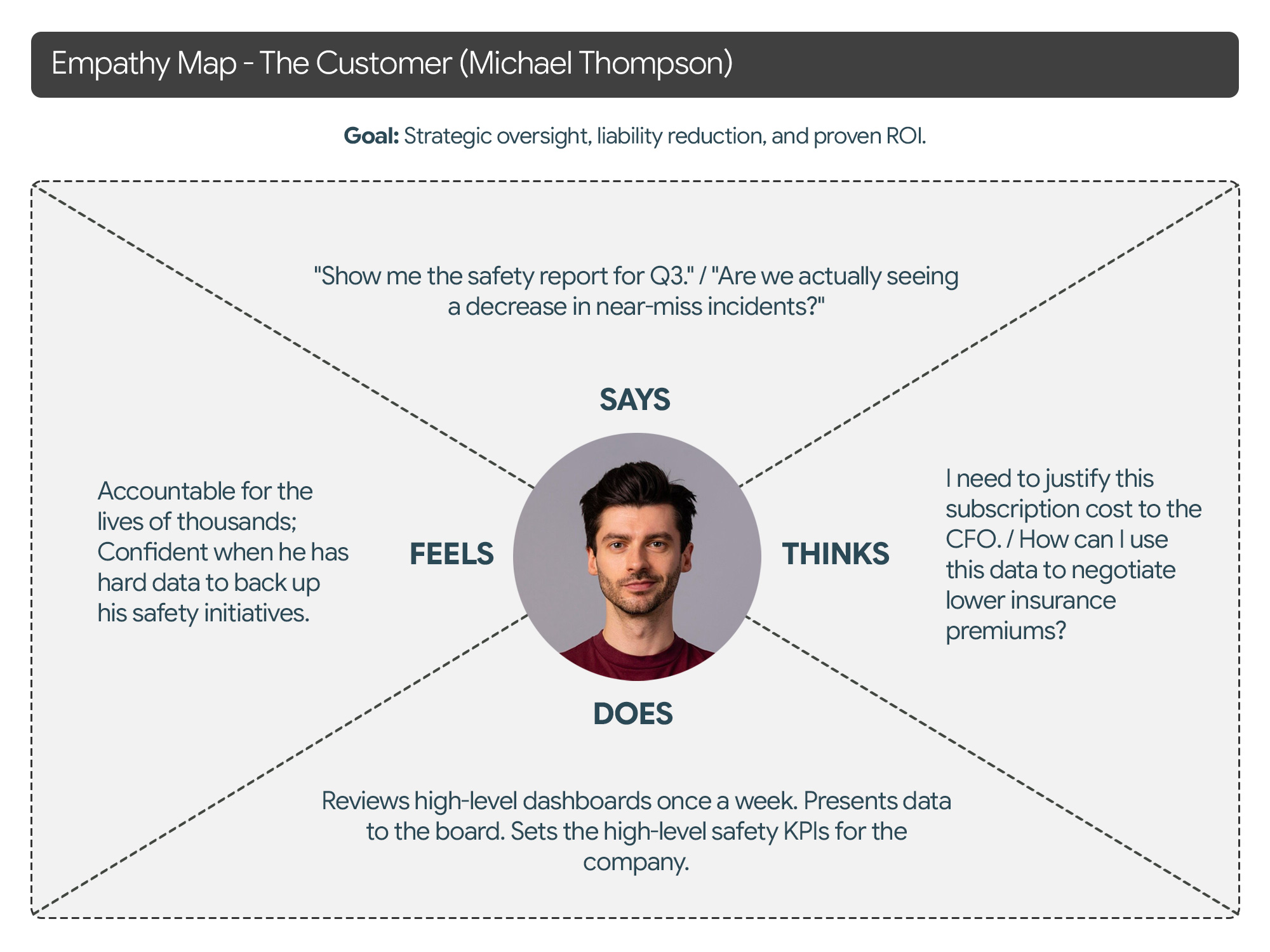
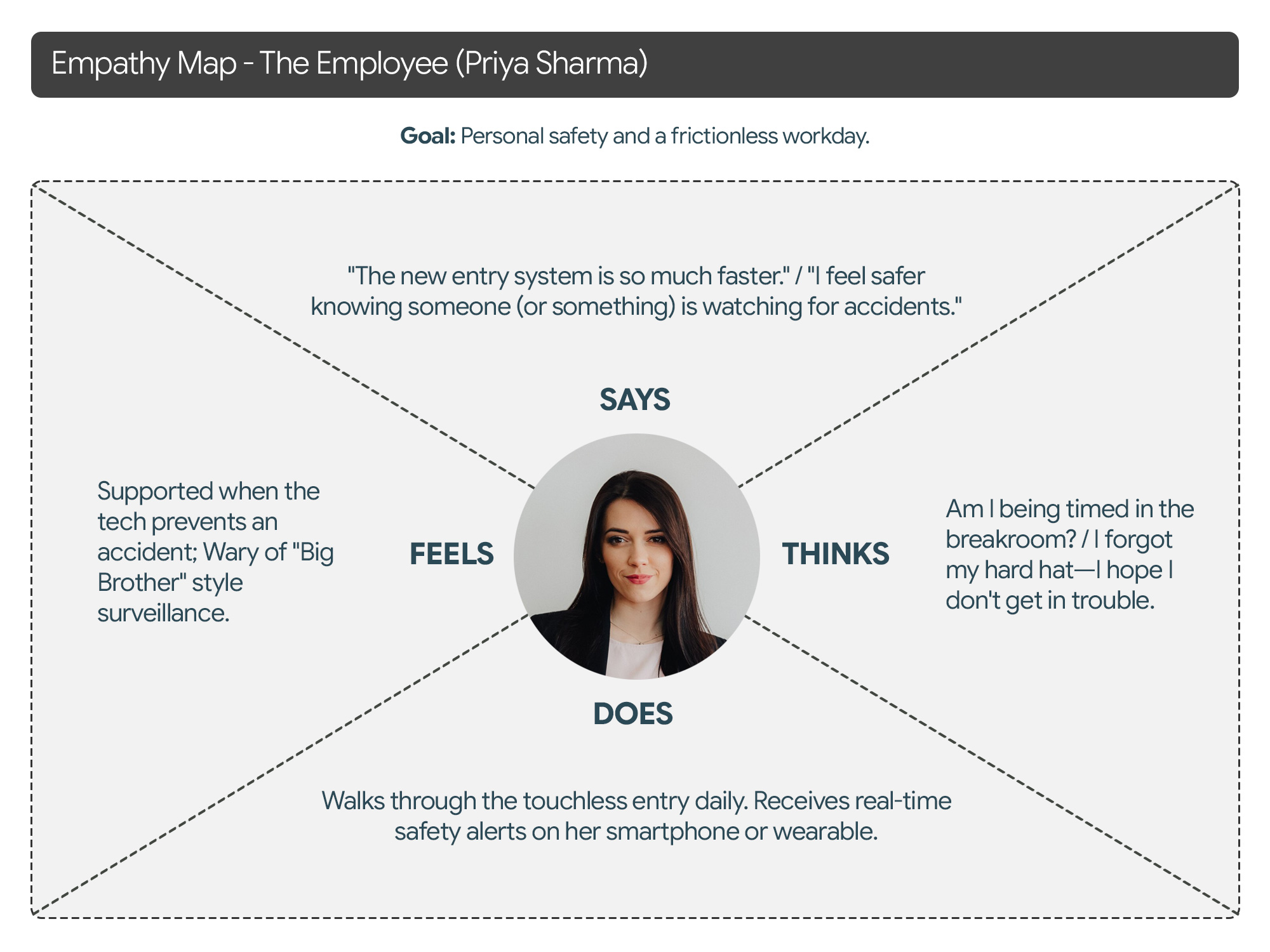
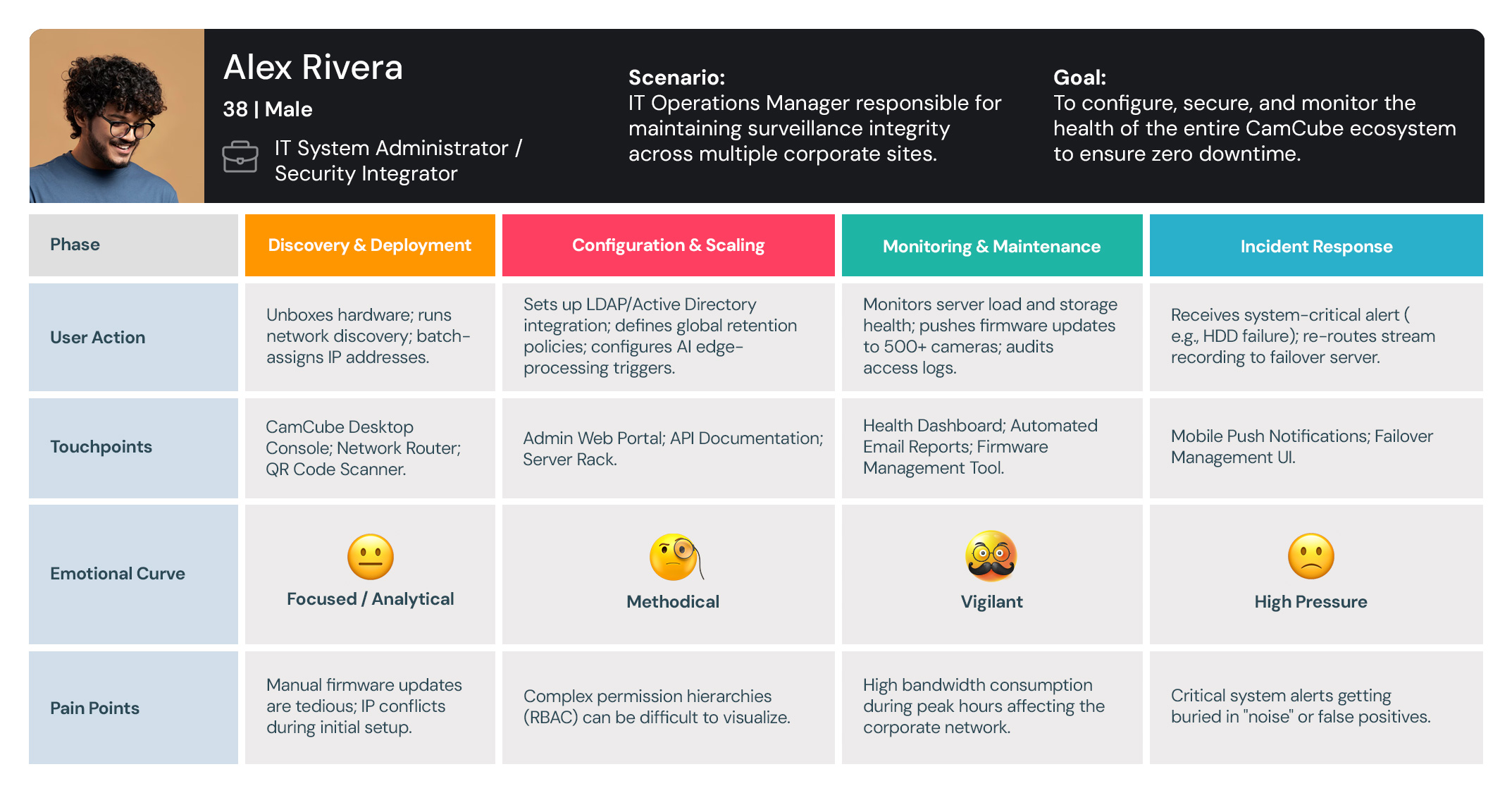
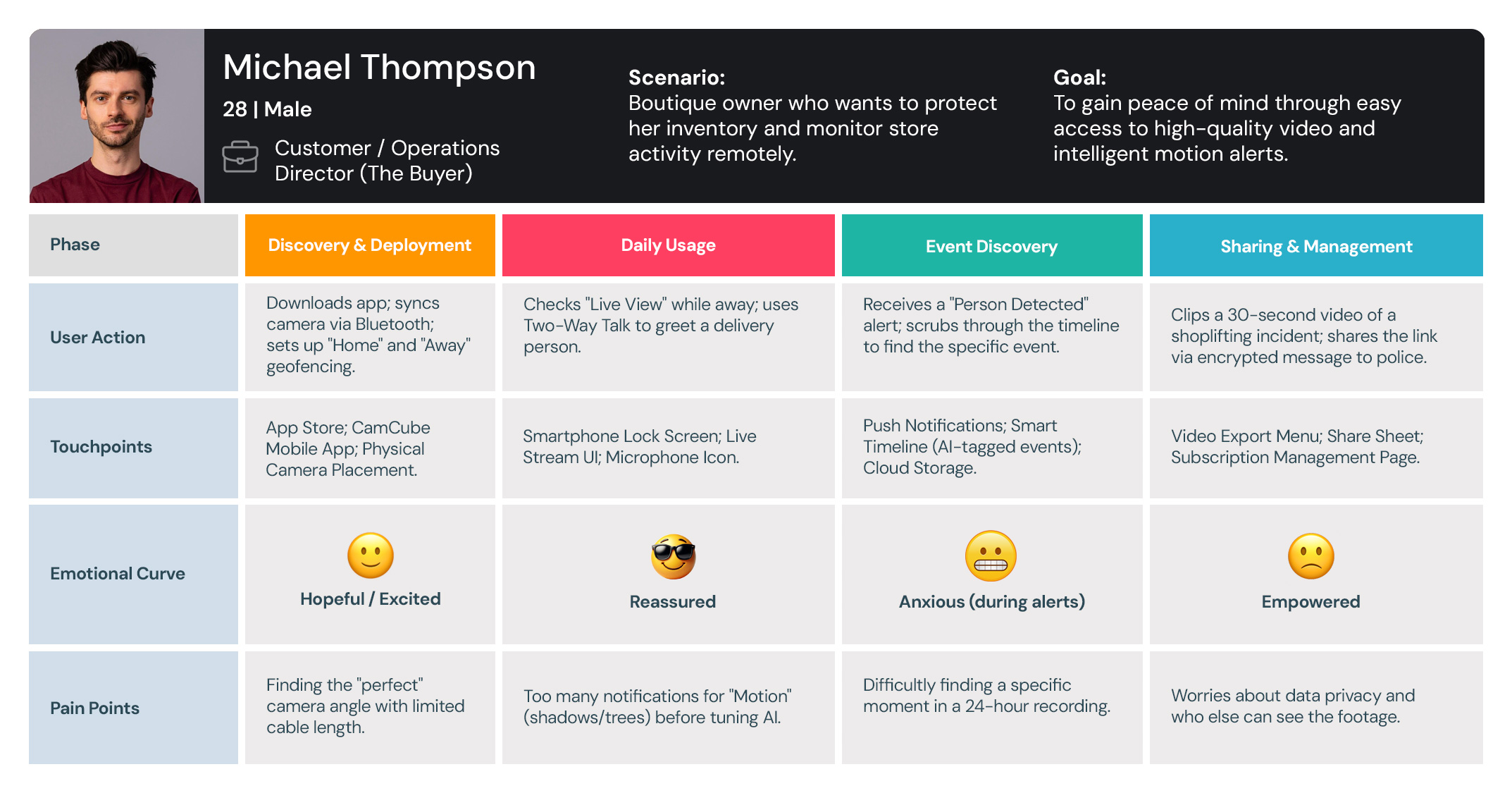
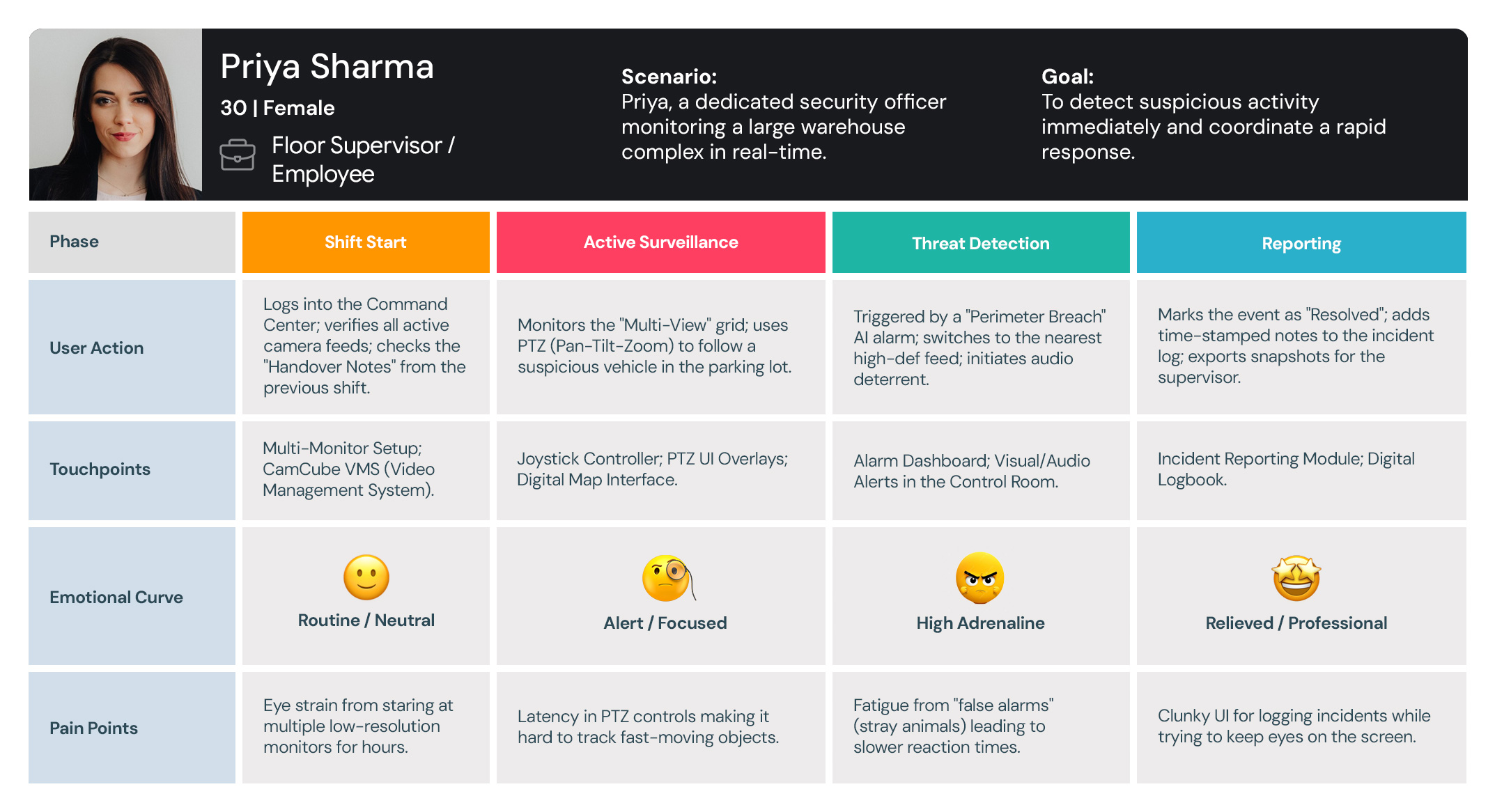
My interviews with the Business Users and Callers provided critical, detailed information. This foundation allowed me to successfully create the resulting personas and journey maps.
Personas
Empathy Map
User Journey Maps
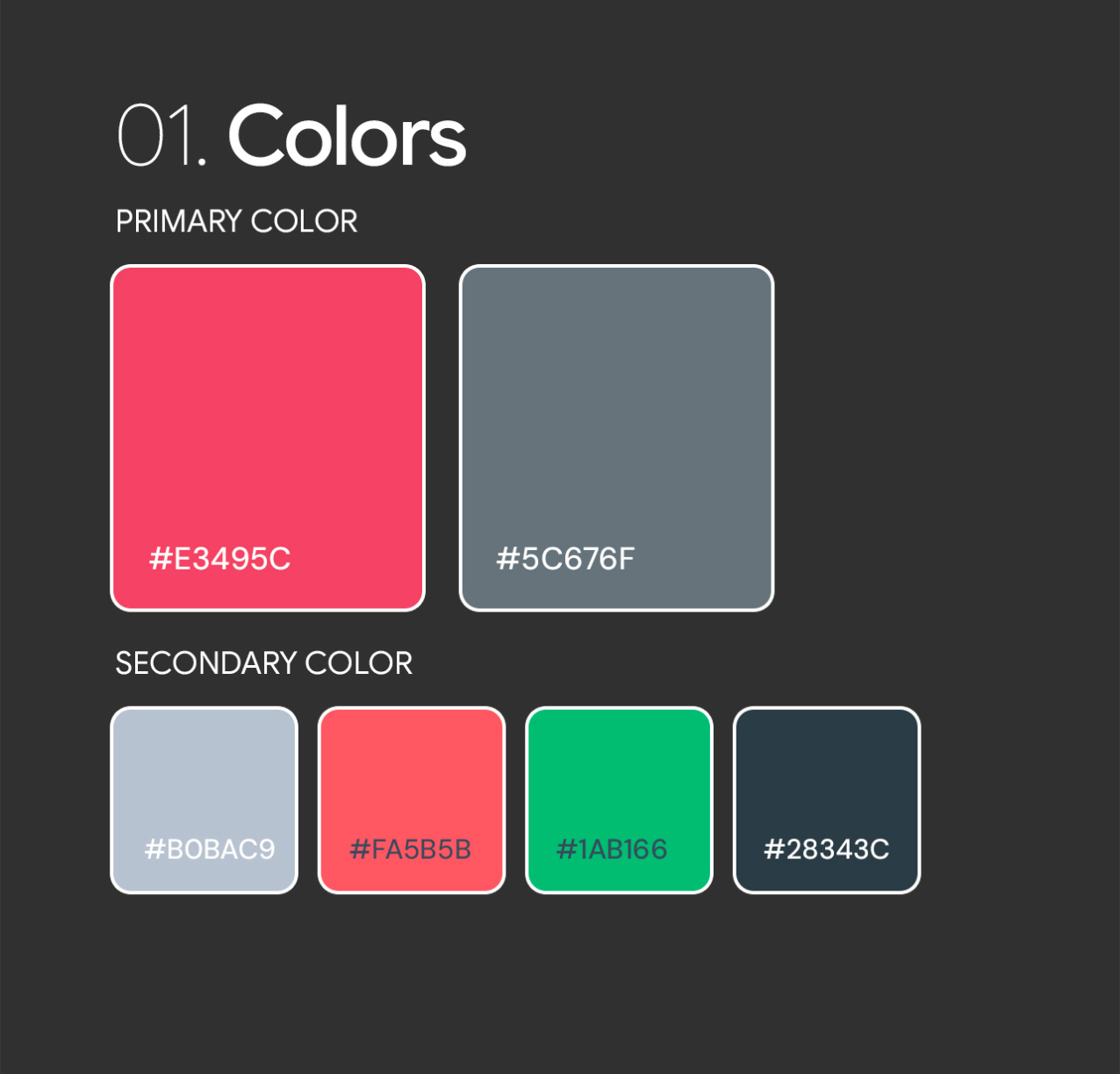
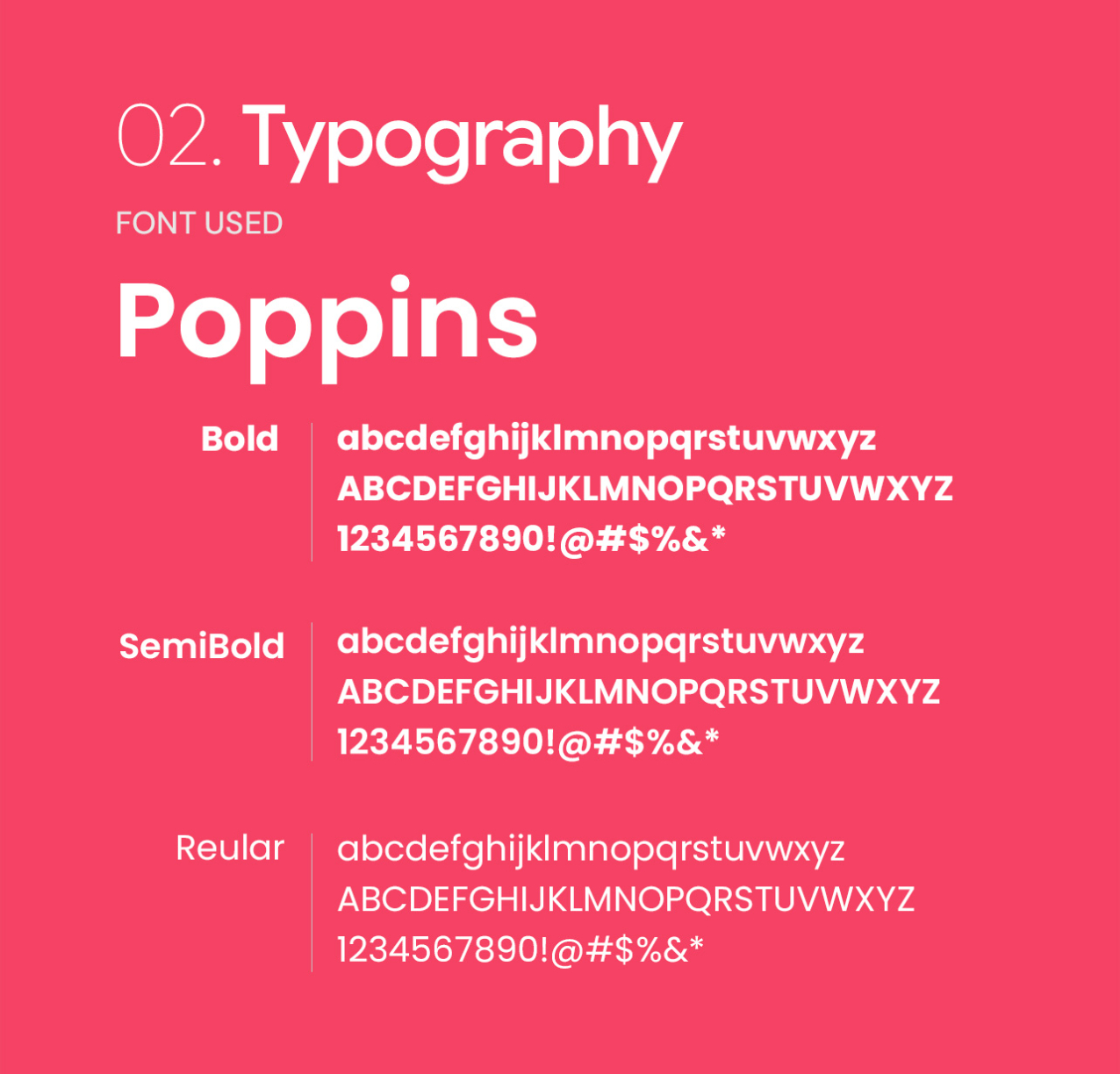
Style Guide