Strategy | UI/UX | IoT
Predictive Maintenance Web App
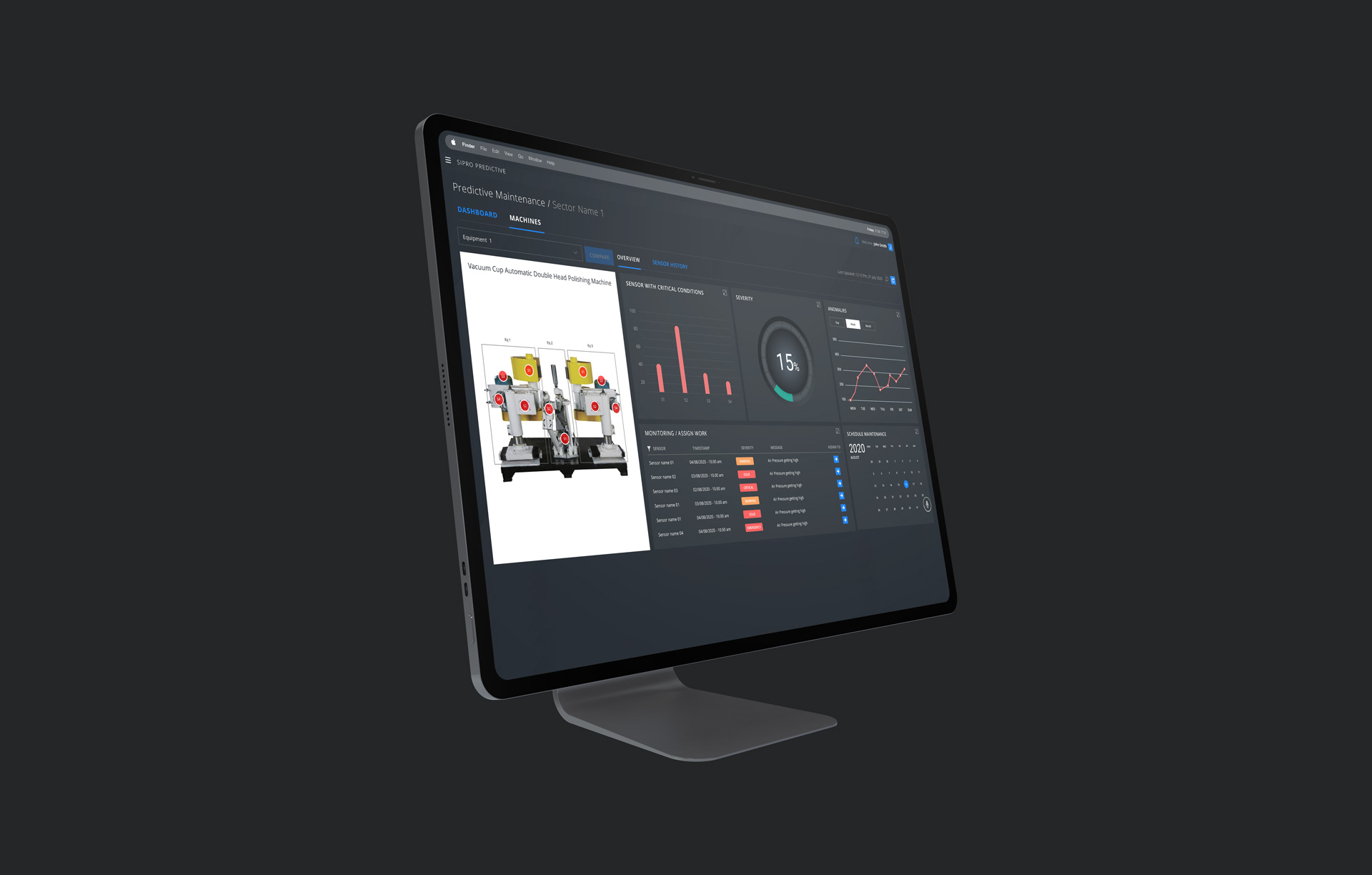
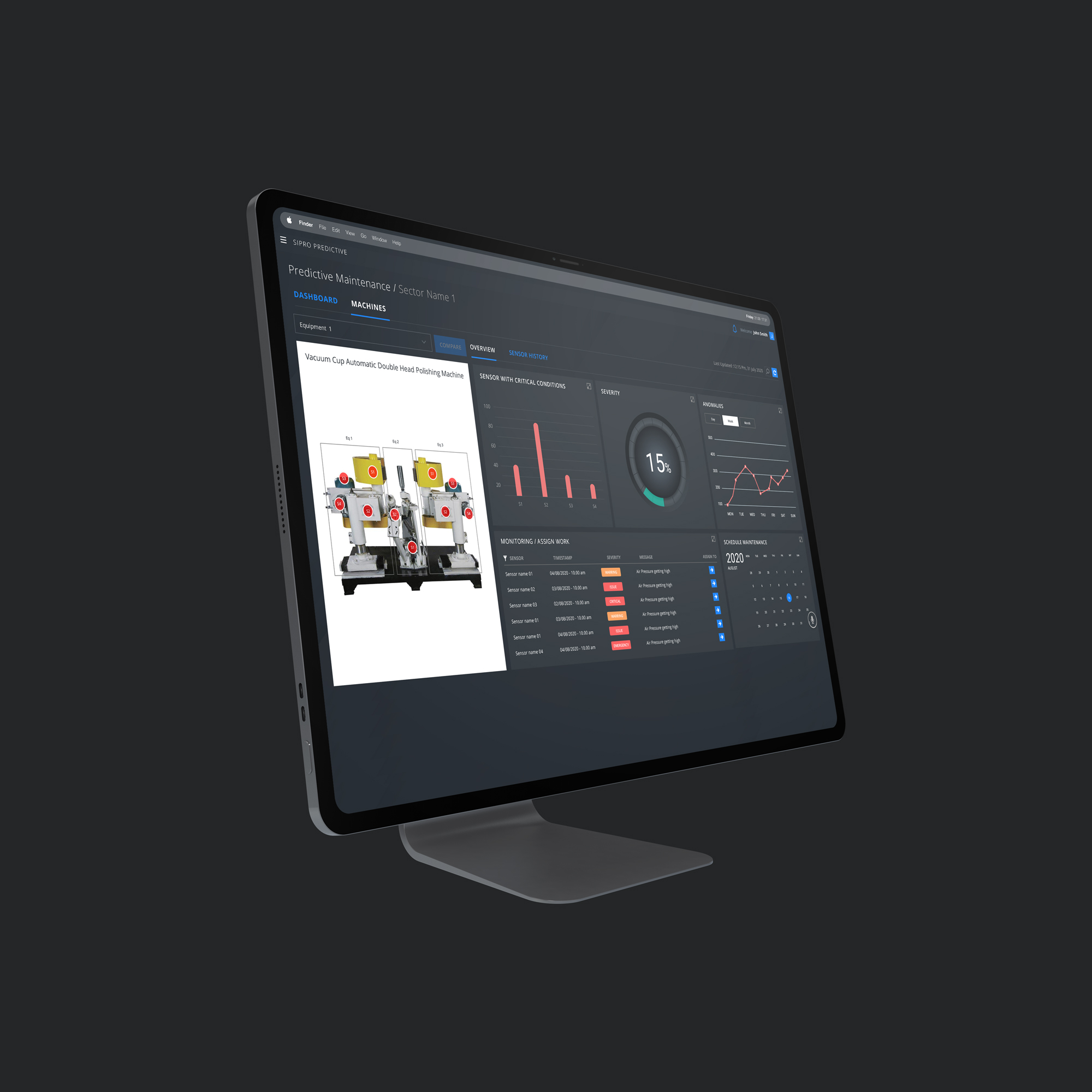
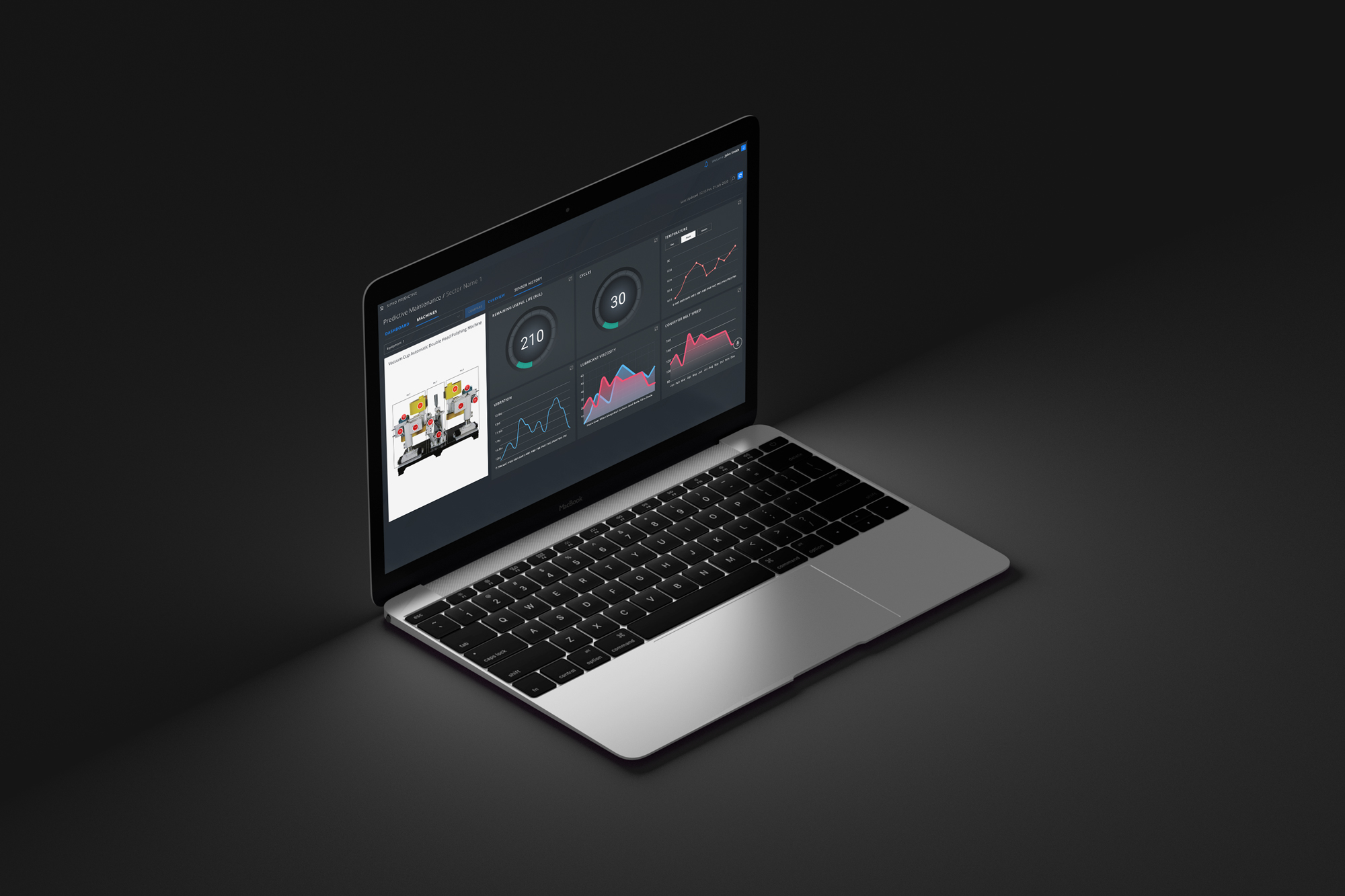
Sipro is a comprehensive Industrial Internet of Things (IIoT) solution designed to modernize equipment management and maintenance. By seamlessly integrating advanced physical sensors with intelligent software, Sipro provides continuous, real-time visibility into machine health and operational efficiency.
The primary goal of the Sipro system is to transition industrial operations from reactive troubleshooting to proactive, data-driven maintenance—ultimately reducing downtime, optimizing performance, and extending the lifespan of critical assets.
Core Monitoring Capabilities
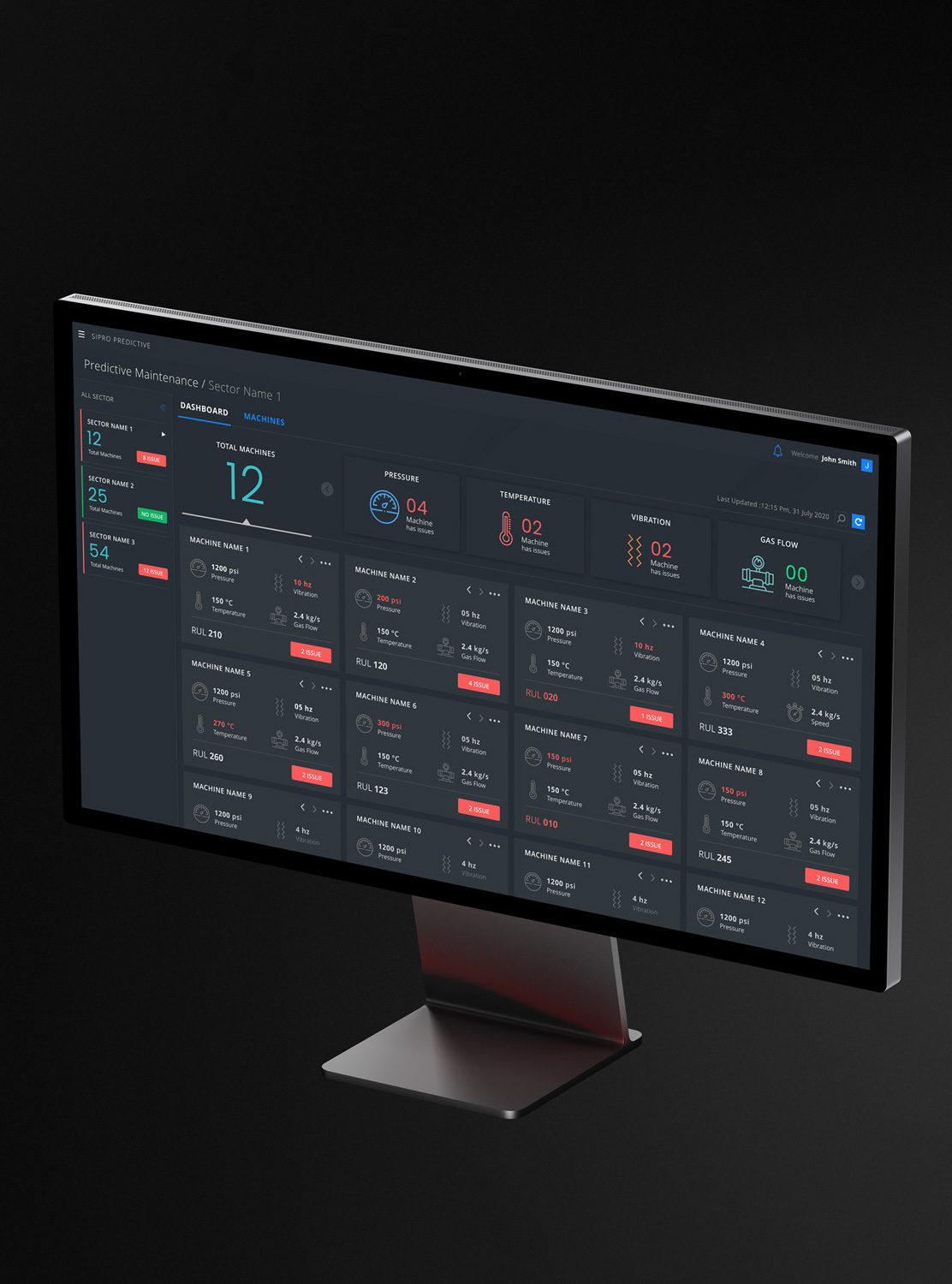
Sipro utilizes a network of high-fidelity sensors to capture critical performance metrics across four primary vectors:
Temperature Tracking: Continuously monitors thermal output to detect overheating, friction issues, or cooling system failures before they cause irreversible damage to machine components.
Pressure Monitoring: Ensures hydraulic and pneumatic systems are operating within safe and optimal thresholds, immediately flagging pressure drops or dangerous spikes that could indicate leaks or blockages.
Vibration Analysis: Measures mechanical oscillations to identify early signs of wear and tear, misalignment, or imbalance in rotating machinery (like motors, pumps, and fans), enabling highly accurate predictive maintenance.
Gas Flow Analytics: Tracks the volume and velocity of industrial gases in real-time. This ensures optimal resource utilization, maintains process efficiency, and rapidly detects hazardous or wasteful leaks.
Design
Strategy
Client
Sipro
Problem Statement
The Core Issue:
Modern industrial and manufacturing facilities rely heavily on the continuous operation of complex, high-value machinery. However, many operations still depend on reactive or rigid schedule-based maintenance strategies. Without continuous, real-time visibility into the physical health of their equipment, plant operators are left blind to the micro-degradations that precede catastrophic machine failures.
Specific Challenges Addressed:
Costly Unplanned Downtime: Relying on manual inspections or running equipment to the point of failure results in sudden breakdowns. This unexpected downtime halts production, disrupts supply chains, and incurs massive emergency repair costs.
Lack of Real-Time Diagnostic Visibility: Operators currently lack immediate, centralized insights into critical operational metrics. Invisible issues—such as gradual temperature increases, minute pressure drops, irregular mechanical vibrations, or silent gas leaks—often go unnoticed until they cause critical damage.
Inefficient Resource Management: Without precise tracking of gas flow and equipment performance, facilities struggle to optimize their energy and resource consumption, leading to operational waste and increased environmental impact.
Compromised Workplace Safety: Fluctuating machine parameters, such as dangerous pressure spikes or overheating components, pose severe safety hazards to the workforce if not detected and mitigated instantly.
By merging reliable IoT hardware with an expertly crafted digital experience
Sipro introduces a cohesive, end-to-end Industrial IoT ecosystem that eliminates the guesswork of machine maintenance. By combining high-precision physical sensors with an intelligent, user-centric software platform, Sipro transforms raw telemetry into actionable insights. It empowers facility operators to monitor, analyze, and manage their entire equipment fleet in real-time from a single, streamlined interface.
Key Pillars of the Sipro Solution
-
Integrated Sensor Network: Sipro deploys a robust array of IoT sensors directly onto critical machinery. This hardware layer continuously and accurately captures the four essential health metrics: temperature fluctuations, pressure levels, mechanical vibrations, and gas flow rates.
-
Real-Time Data Processing: The physical sensors feed data instantly into a centralized cloud or edge-computing infrastructure. This ensures that the information reflects the exact, up-to-the-second physical state of the machinery, leaving no gap between an event occurring and the system registering it.
-
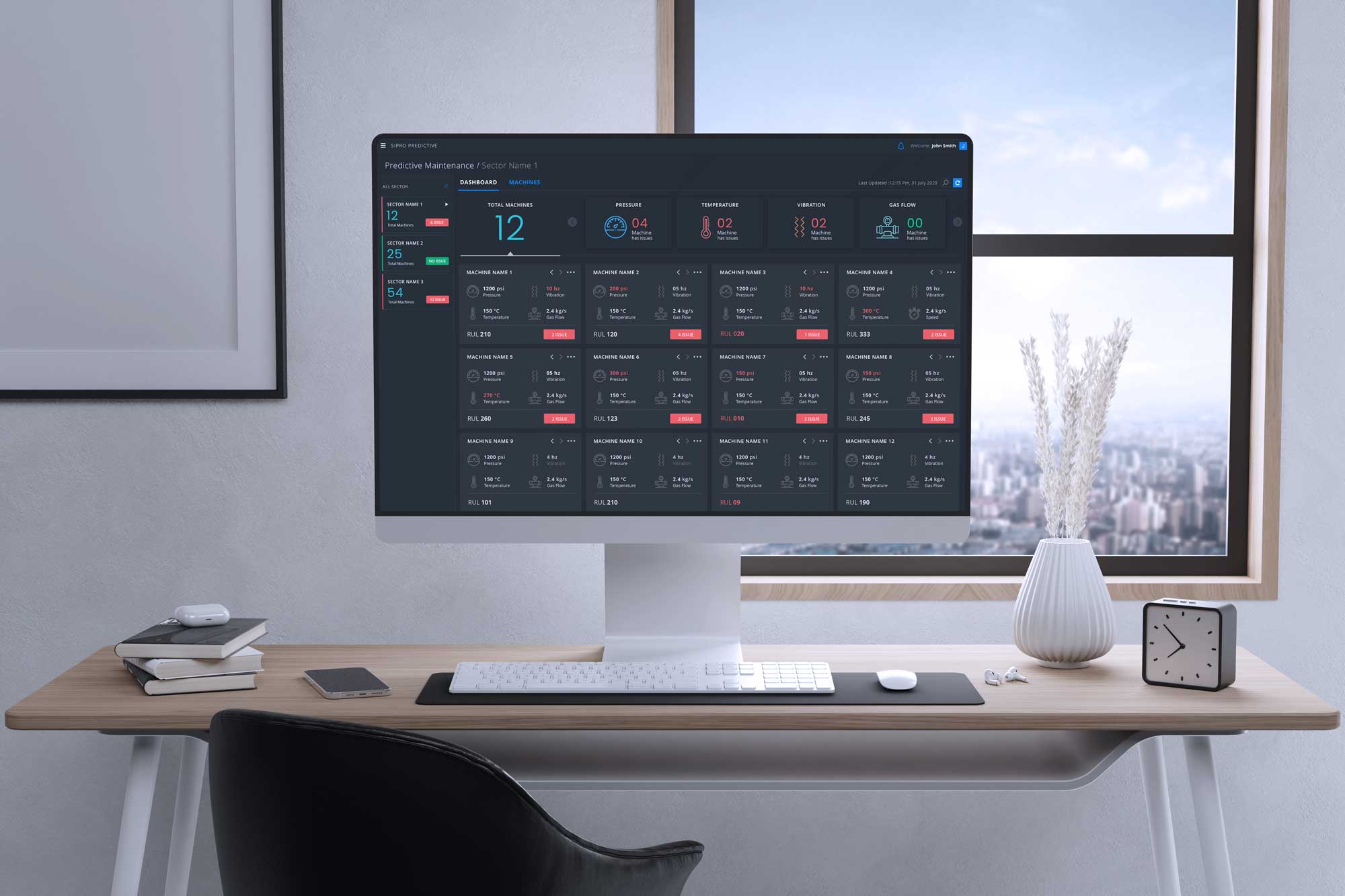
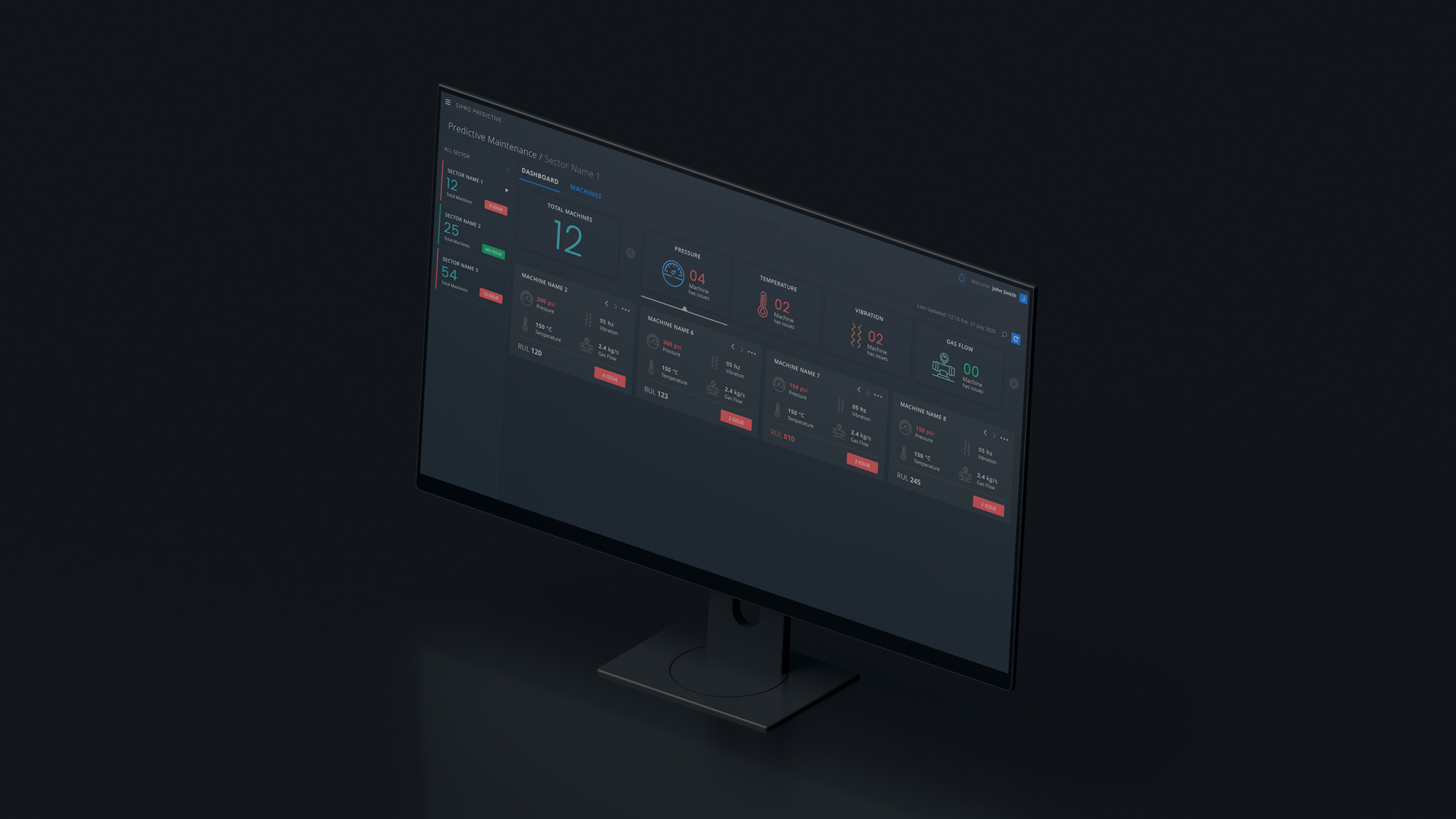
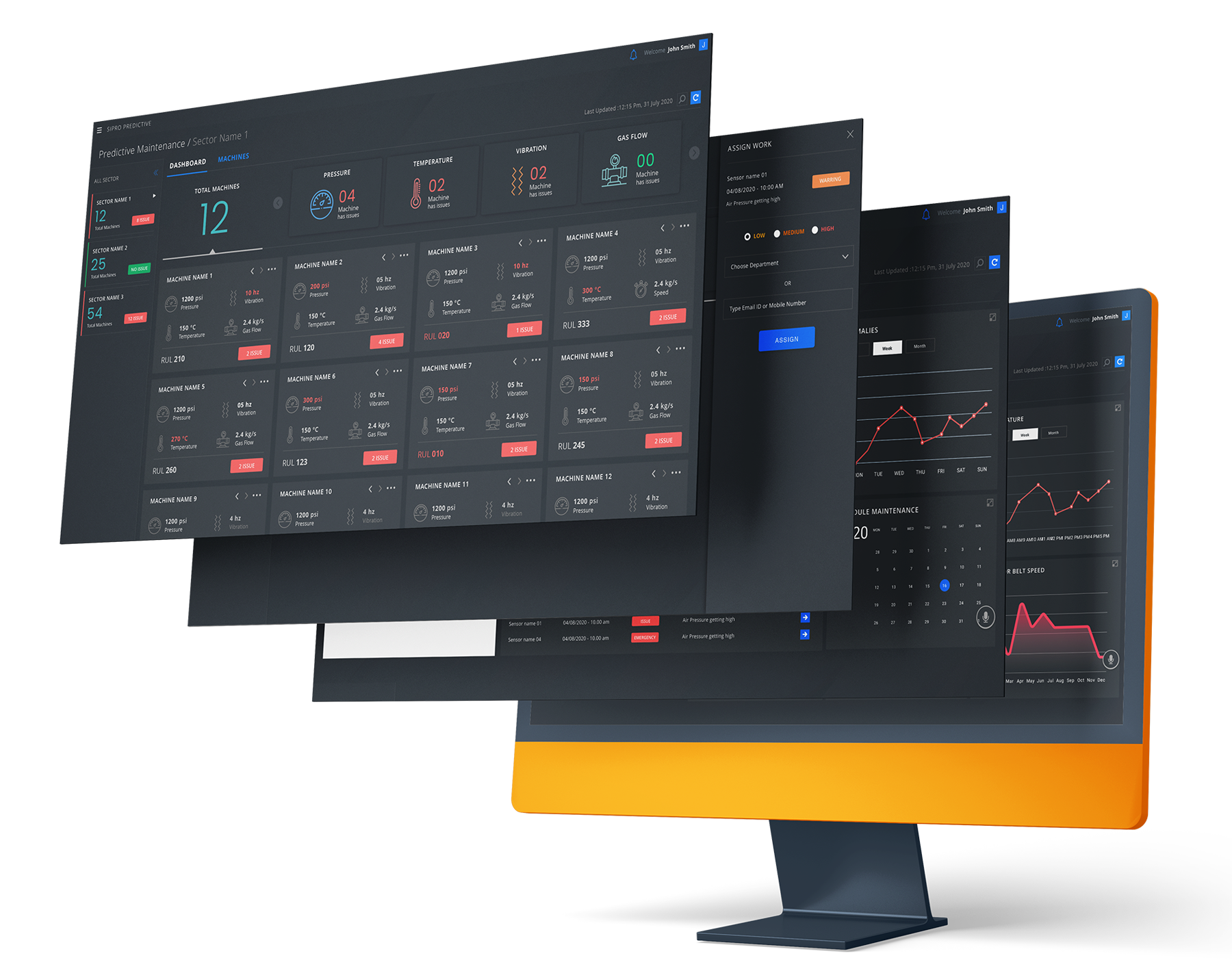
Intuitive Management Dashboard: The complexity of industrial data is translated into a clean, highly visual interface. Operators are equipped with well-structured data visualizations, enabling them to grasp the health of complex systems at a glance without cognitive overload.
-
Predictive Alerting System: Instead of overwhelming users with raw data, the software applies intelligent thresholds. It utilizes a clear alert hierarchy to notify managers immediately of anomalies—such as a sudden pressure drop or abnormal vibration—before a critical failure occurs.
-
Proactive Action Workflows: The solution moves beyond simple monitoring by enabling direct equipment management. When a parameter falls out of bounds, the system provides contextual data to maintenance teams, allowing them to schedule targeted repairs, adjust machine loads, or safely shut down compromised equipment.
The Users and the Industry
Designing an effective interface for the Sipro Machine Monitoring System requires more than just displaying sensor data; it demands a comprehensive grasp of the industrial landscape and the high-stakes environment in which our end-users operate.
The Industry Context: Industrial IoT & Manufacturing
The industrial sector is undergoing a rapid digital transformation, moving away from legacy, siloed systems toward interconnected, data-driven operations. However, this environment presents unique challenges:
High Cognitive Load: Facilities generate massive amounts of telemetry data (pressure, temperature, vibration, gas flow) every second.
Harsh Environments: Users often access applications on the factory floor, requiring interfaces that account for glare, physical distance from screens, and the need for rapid comprehension.
Critical Stakes: An ignored alert or a misunderstood data point isn’t just a usability hiccup; it can lead to catastrophic machine failure, financial loss, or safety hazards.
To succeed, the Sipro platform’s design strategy must prioritize flawless information architecture, ensuring that complex data is translated into clear, actionable, and highly scannable visual indicators.
Personas
& User Journey Maps
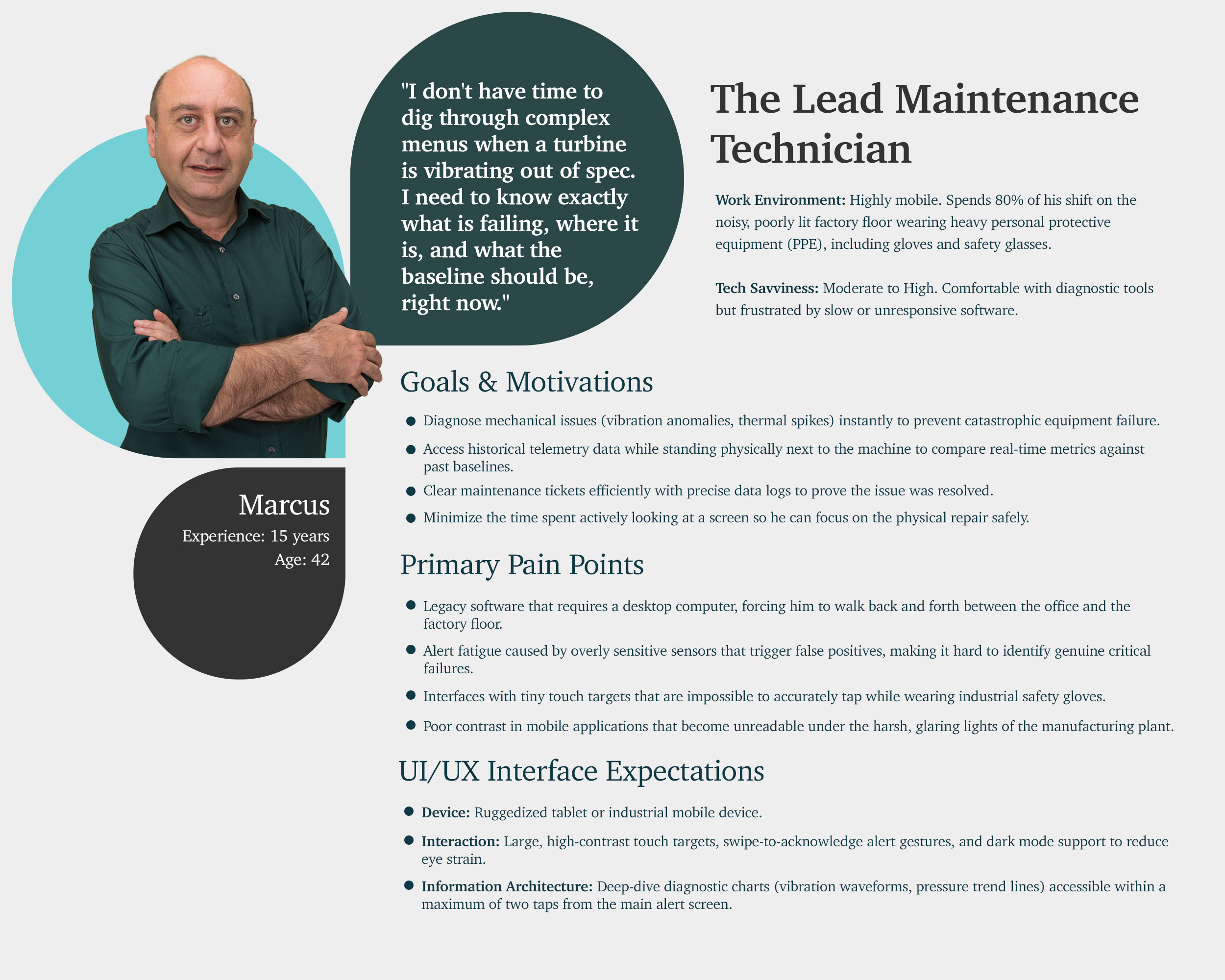
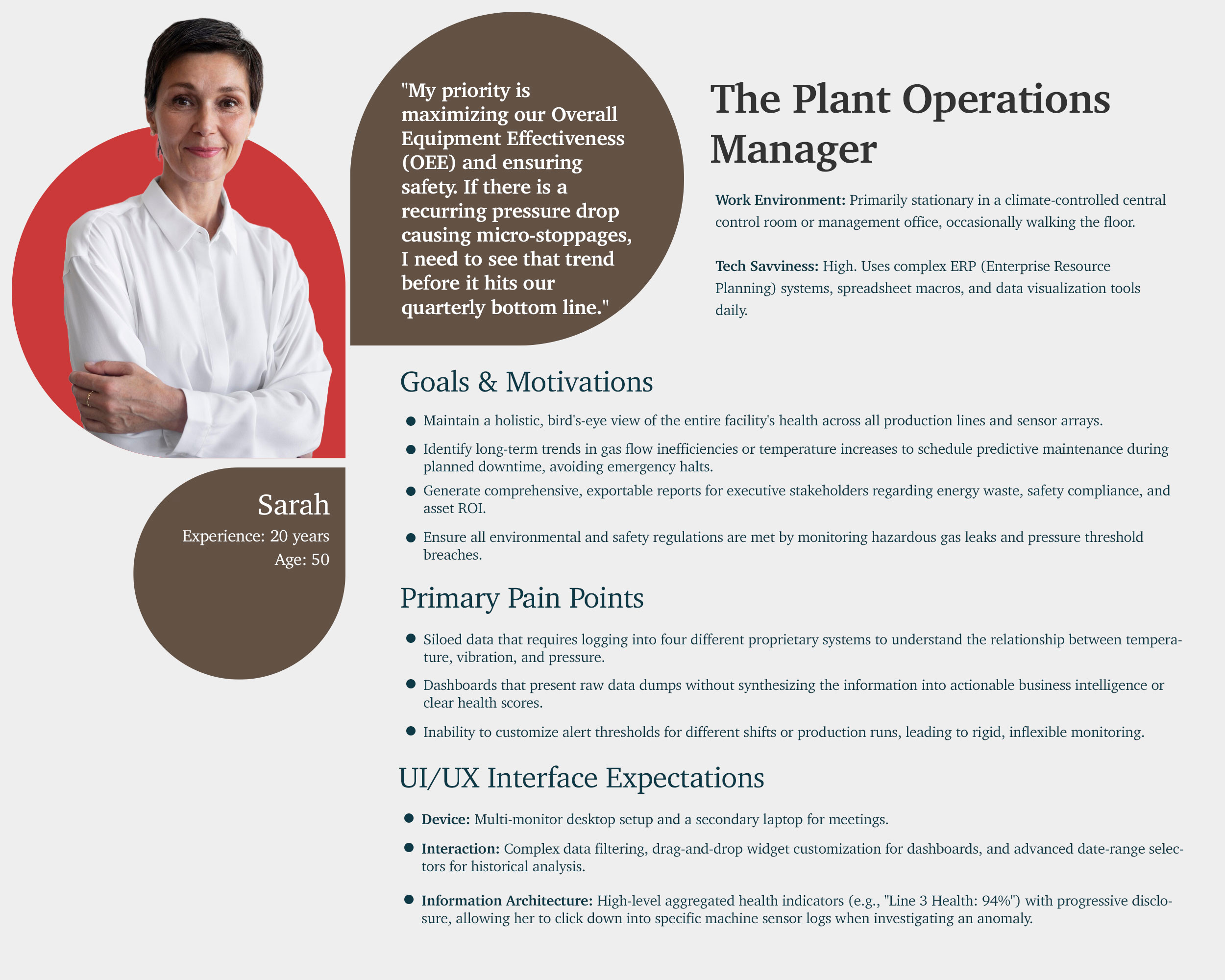
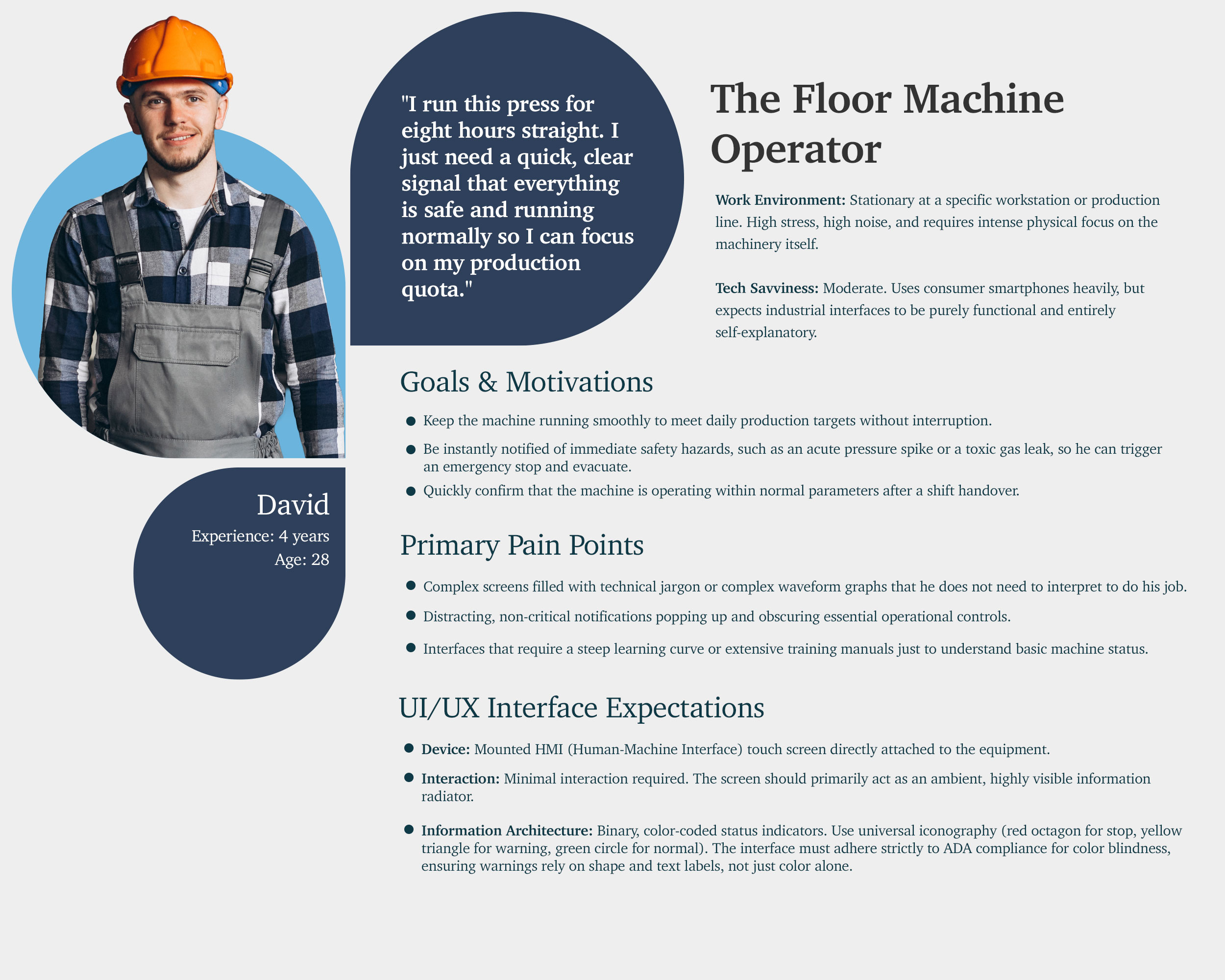
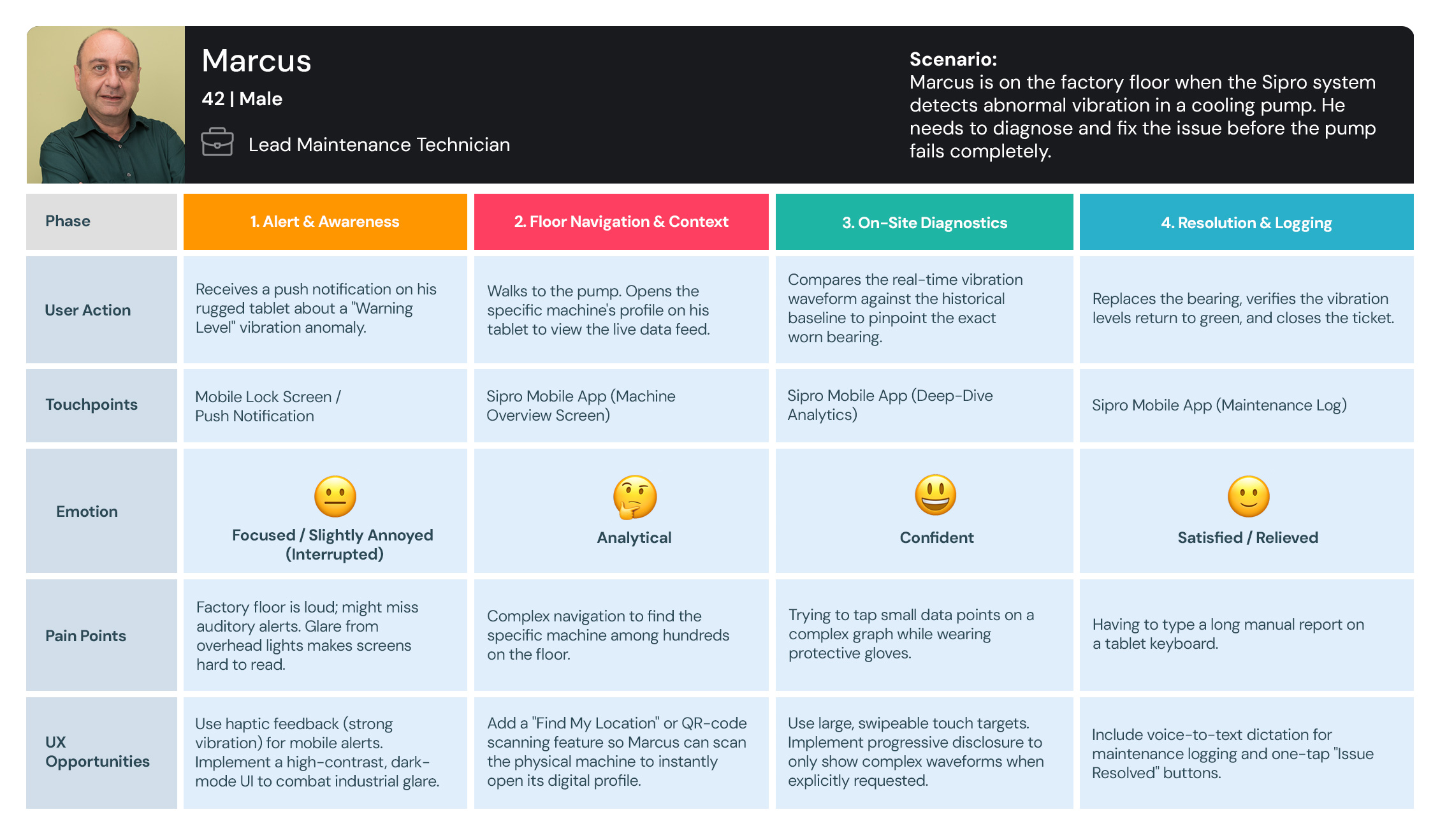
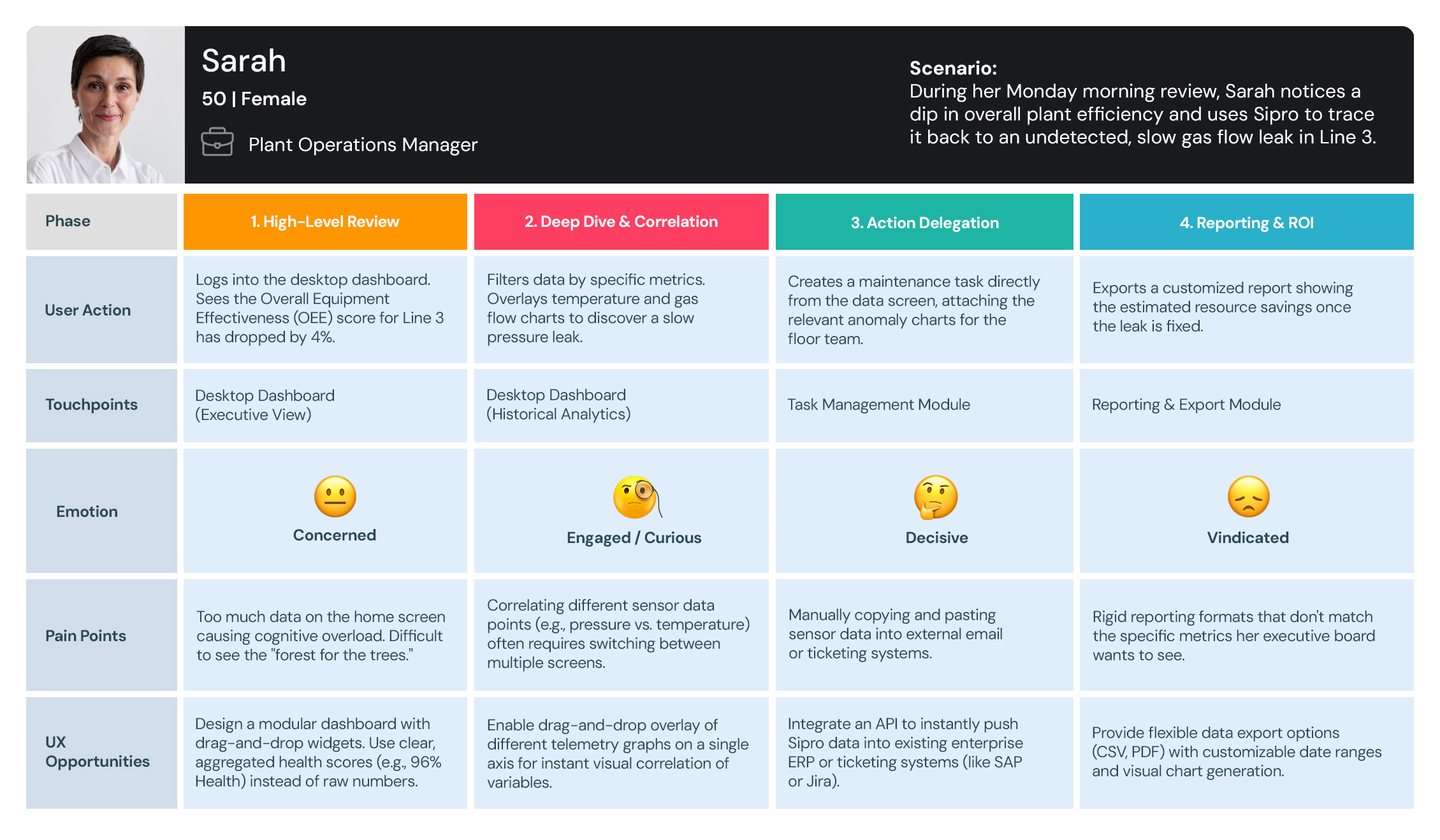
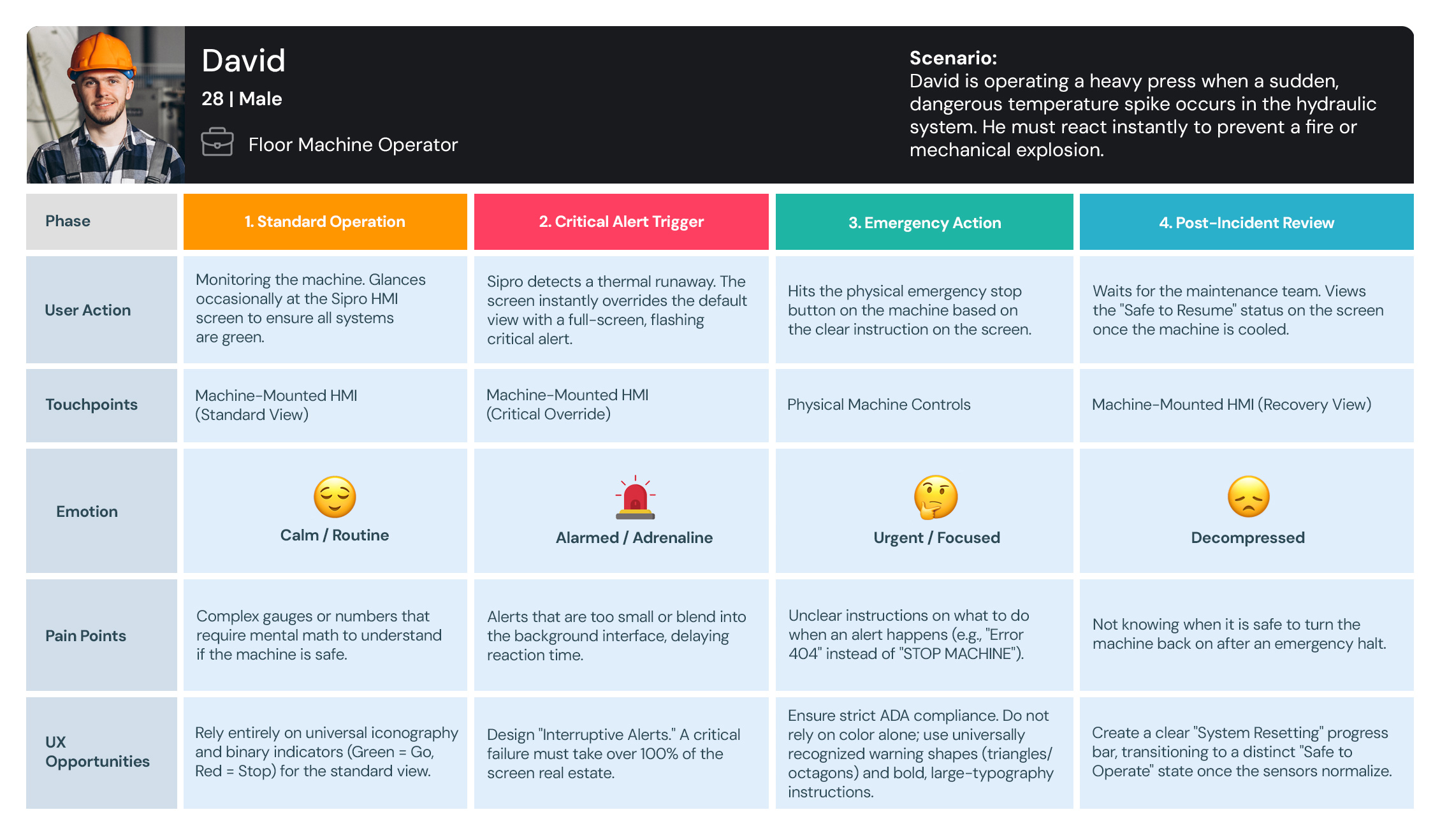
My interviews with the Business Users and Callers provided critical, detailed information. This foundation allowed me to successfully create the resulting personas and journey maps.
Personas
User Journey Maps
Information
Architecture.
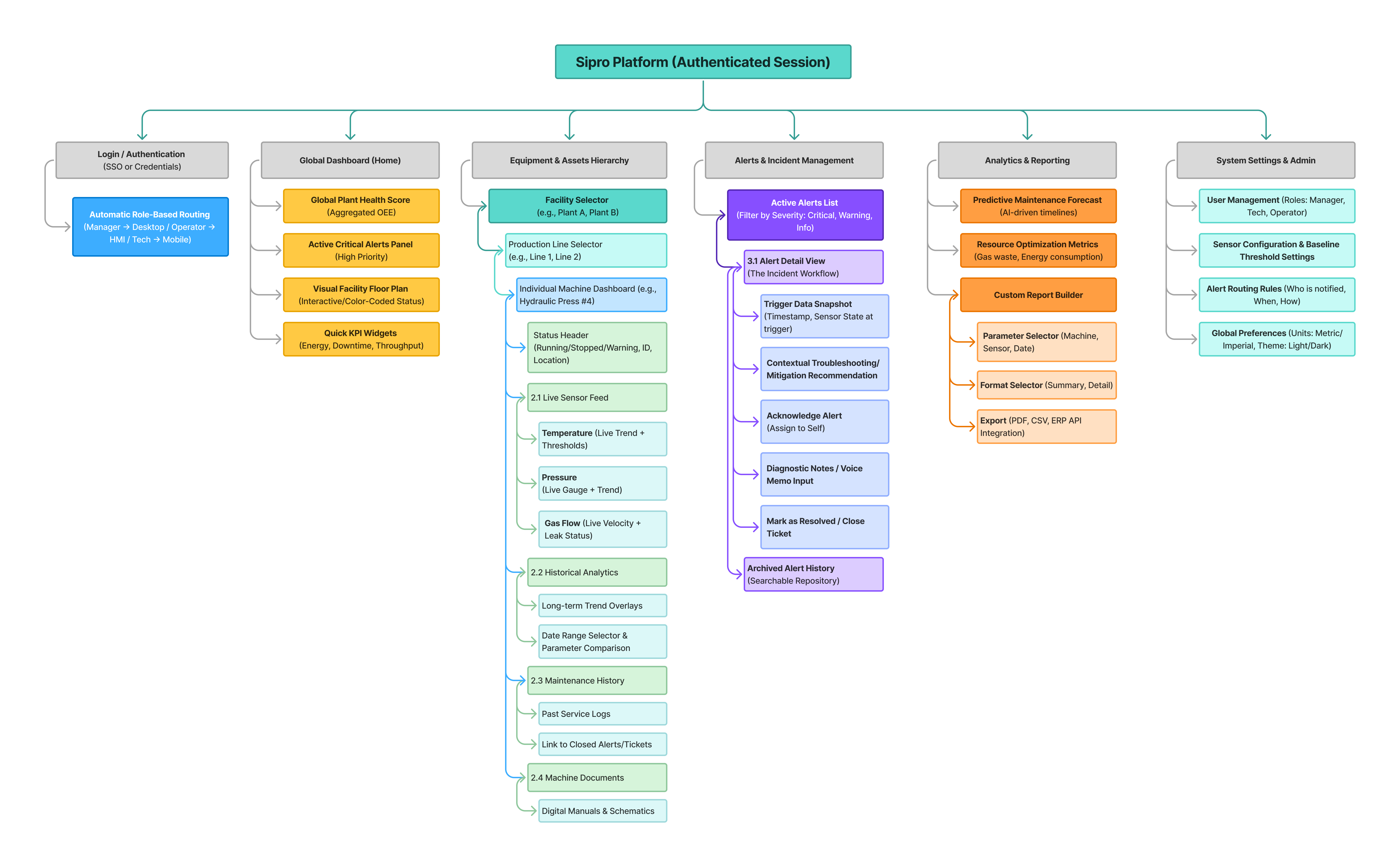
Here is the Information Architecture (IA) for the Sipro Machine Monitoring System.
This structure applies Progressive Disclosure, meaning it starts with high-level summaries (for Plant Managers and Operators) and allows users to drill down into granular, specific sensor data (for Maintenance Technicians).
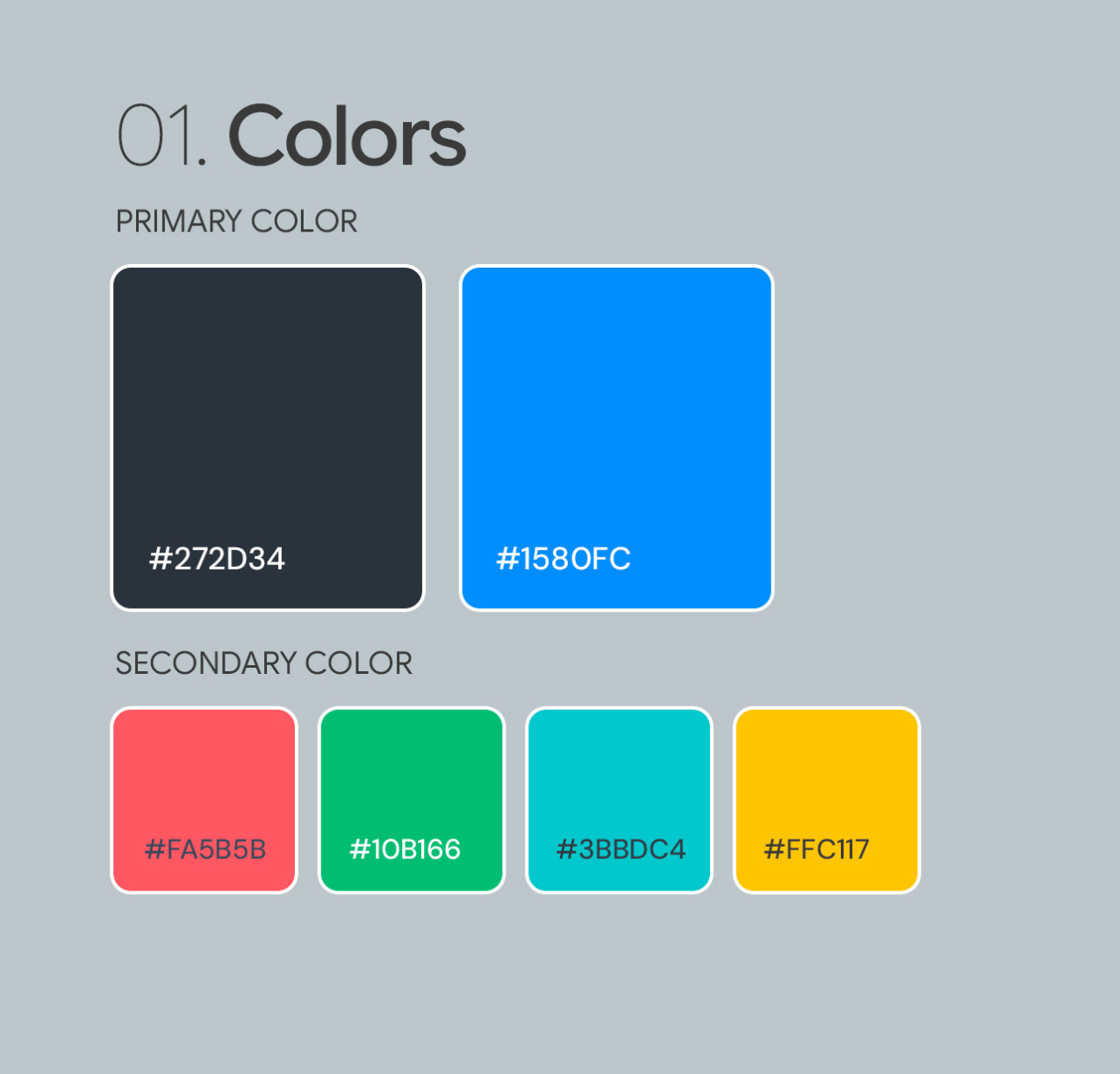
Style Guide